
Didelotia engleri
Didelotia engleri
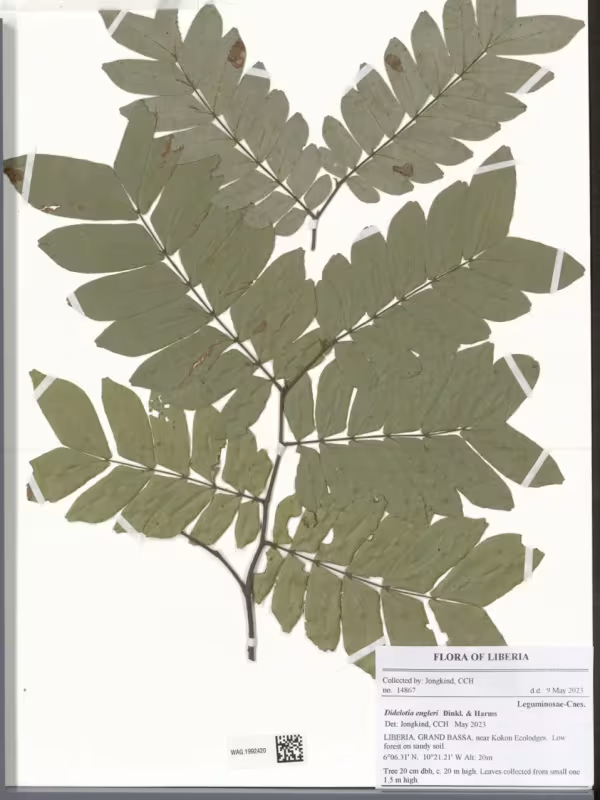
Description
Sowing dates
Didelotia engleri is a tropical tree species belonging to the Fabaceae family, naturally occurring within the forest ecosystems of West and Central Africa.
Unlike annual agricultural crops, this is a long-lived forestry species, necessitating specific nursery conditions for seed propagation.
Seeds are harvested during the natural fruit maturation period, followed by pre-treatment to ensure optimal germination rates in humid tropical environments.
Sowing is typically performed in well-drained substrates rich in organic matter, mimicking the natural forest floor essential for seedling establishment.
Young trees require controlled light exposure, as they are naturally adapted to the semi-shaded conditions found beneath the forest canopy.
Growing requirements
As a typical resident of tropical rainforests, this species demands high humidity levels and consistently warm temperatures throughout the year.
The trees prefer deep, well-aerated loamy or sandy soils, which are characteristic of regions with high rainfall and active biological nutrient cycling.
Didelotia engleri is sensitive to prolonged drought, as its physiological functions are finely tuned to sustain growth under constant soil moisture conditions.
Optimal development is observed in areas with distinct wet seasons, which provide the essential moisture reserves required for significant biomass accumulation.
Effective management requires maintaining soil structural integrity and preventing erosion, which is particularly critical in regions with intense precipitation.
Yield
Economic utility of Didelotia engleri focuses primarily on its high-quality timber, highly valued for its durability and resistance to external degradation.
The cultivation cycle to commercial maturity spans decades, classifying it as a long-term investment for sustainable tropical forestry operations.
Yield is measured by the volume of timber produced per hectare, though actual figures depend heavily on silvicultural intensity and stand density.
The timber of this species is utilized in high-end furniture manufacturing, structural construction, and decorative woodwork due to its dense texture.
Experts highlight the species' potential for inclusion in mixed forest plantations, balancing the extraction of valuable raw materials with biodiversity conservation.
Main diseases and pests
The primary threats to population stability include anthropogenic impacts, such as unregulated logging activities and the fragmentation of natural habitats.
The species is susceptible to specific tropical fungal diseases that may compromise bark health and root system vitality if cultivation protocols are neglected.
Pests, particularly wood-boring beetles and various xylophagous insects, pose a significant threat to timber quality by creating internal galleries in the trunk.
Climate-induced ecosystem imbalances can weaken tree defenses, increasing their susceptibility to secondary pathogen infestations and environmental stress.
Disease management in tropical settings is complex due to the challenges of monitoring large forest expanses, emphasizing the importance of preventive care.