
Dictyosphaerium ehrenbergianum
Dictyosphaerium ehrenbergianum
Description
Growing requirements
Dictyosphaerium ehrenbergianum belongs to the green algae division, family Dictyosphaeriaceae. This is a freshwater microscopic culture found globally in standing or slow-moving water bodies.
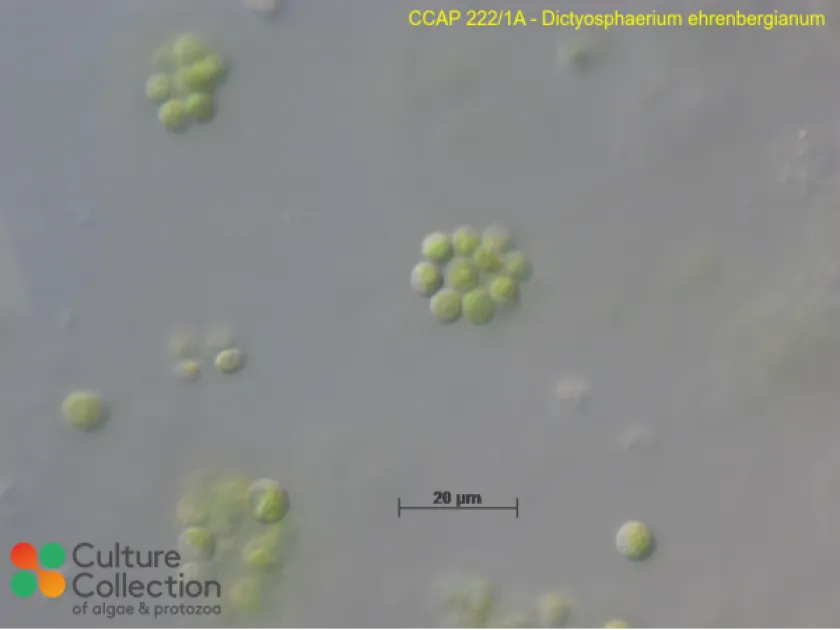
This organism is a colonial alga with cells connected by remnants of parental cell walls. It prefers mesotrophic and eutrophic water bodies, showing high plasticity to temperature fluctuations.
For active growth, the culture requires high light intensity and the availability of mineral nitrogen and phosphorus. The optimal pH range for colony development is between 6.5 and 8.5 units.
In industrial settings, cultivation is carried out in open photobioreactors or closed systems with forced aeration. A crucial factor is ensuring proper gas exchange, as the alga actively consumes carbon dioxide.
The temperature range for maintaining culture viability is between 15 and 28 degrees Celsius. If values deviate from this range, biomass productivity decreases significantly.
Yield
The yield of Dictyosphaerium ehrenbergianum for biotechnological purposes is assessed by the amount of dry biomass per liter of culture volume. In intensive systems, this can reach high levels when nutrient concentrations are stable.
The economic use of this species is linked to its high lipid and pigment content, making it a promising candidate for biofuel and animal feed additives. Biomass accumulation is controlled by population density in the reactor.
Harvesting is performed via centrifugation or flocculation, depending on the scale of production. The efficiency of biomass extraction depends directly on the colony's life cycle stage.
Using this alga as feed for fish fry in aquaculture increases larval survival rates. It serves as a natural source of easily digestible protein and essential fatty acids.
Standardizing growing conditions allows for predictable monthly production volumes. Modern photosynthetic control methods can increase cell division rates 2-3 times compared to natural conditions.
Main diseases and pests
The main threats to the culture are pathogenic algal viruses and parasitic chytridiomycete fungi. These can cause mass infection of colonies and their subsequent death in the reactor.
Competition from other phytoplankton species, such as cyanobacteria, often leads to the displacement of the culture. Nutrient imbalance accelerates the development of unwanted microflora.
Insufficient aeration can trigger stagnant conditions and the proliferation of anaerobic bacteria. Metabolic products of these microorganisms are extremely toxic to the Dictyosphaerium population.
Chemical environmental pollution by heavy metals or excess chlorides negatively affects cell wall integrity. This leads to the destruction of the colonial structure and decreased viability.
Disease prevention includes regular equipment sterilization and monitoring of inoculum purity. Using ultraviolet water treatment helps reduce the risk of contamination by foreign microorganisms.