
Princess palm
Dictyosperma album (Bory) H. Wendl. & Drude ex Scheff.
Description
Growing requirements
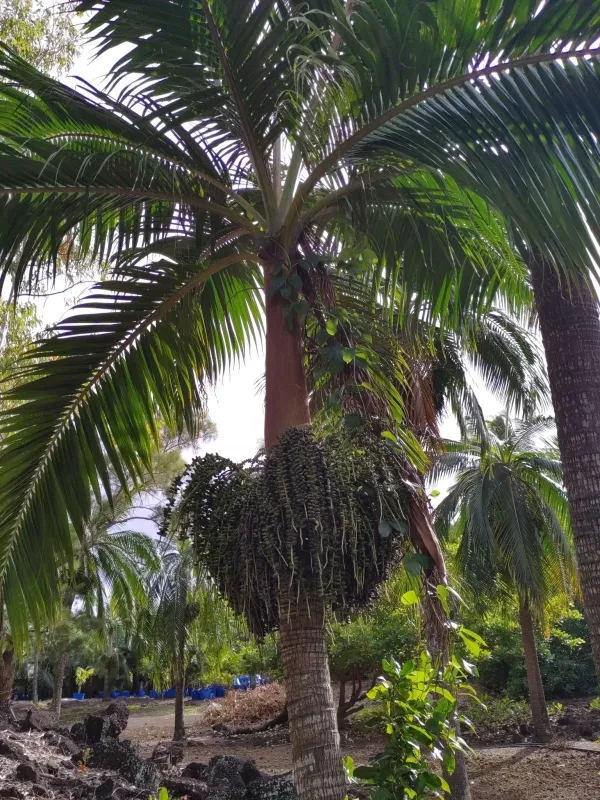
Dictyosperma album, commonly known as the Princess palm, belongs to the family Arecaceae. It is highly valued in horticulture for its slender, ringed trunk and graceful, arching fronds that provide a lush tropical aesthetic.
The species originates from the Mascarene Islands. To thrive in cultivation, it requires a humid, tropical environment that mimics its natural habitat, with temperatures consistently staying above 15°C.
The crop demands a well-draining, nutrient-rich potting medium. A mix containing organic matter, peat, and coarse perlite ensures adequate aeration, which is vital to prevent the roots from suffocating in heavy, waterlogged soil.
Light requirements are significant; while it tolerates partial shade, bright filtered light promotes optimal growth. Direct, intense sunlight should be avoided in interior settings to prevent leaf scorching and dehydration.
Watering frequency should be adjusted according to environmental humidity and temperature. Consistent moisture is essential during the growing season, though the soil surface should be allowed to dry slightly between waterings to maintain root health.
Main diseases and pests
Common pests affecting Dictyosperma album include spider mites and scale insects, which often thrive in indoor environments with low humidity. Regular leaf cleaning and the use of insecticidal soaps are recommended control measures.
Fungal issues, such as root rot and leaf spot, are prevalent when drainage is poor or air circulation is insufficient. Ensuring good airflow around the fronds and preventing standing water in the drainage tray are key preventative strategies.