
Dichondra repens
Dichondra repens J. R. Forst. & G. Forst.
Description
Sowing dates
Sowing seeds of Dichondra repens for seedlings is primarily carried out in the winter period, in January or February, to obtain developed plants by the time they are planted in open ground. Sprouts appear quite slowly, which is due to the biological characteristics of the crop, so an early start is critical.
Seeds are sown in a nutrient substrate to a depth of no more than 5 millimeters, covering the containers with film or glass to create a greenhouse effect. The optimal temperature for germination should be maintained in the range of 22–24 degrees Celsius.
In southern regions, direct sowing in the ground is possible when steady warmth arrives, but the seedling method remains preferred to ensure even soil coverage. Pricking out the seedlings into separate pots is carried out when two or three true leaves appear.
Planting seedlings in a permanent location is carried out no earlier than when stably warm weather is established, once the risk of recurring frosts has passed. To create a dense carpet, plants are placed at an interval of 10–15 centimeters from each other.
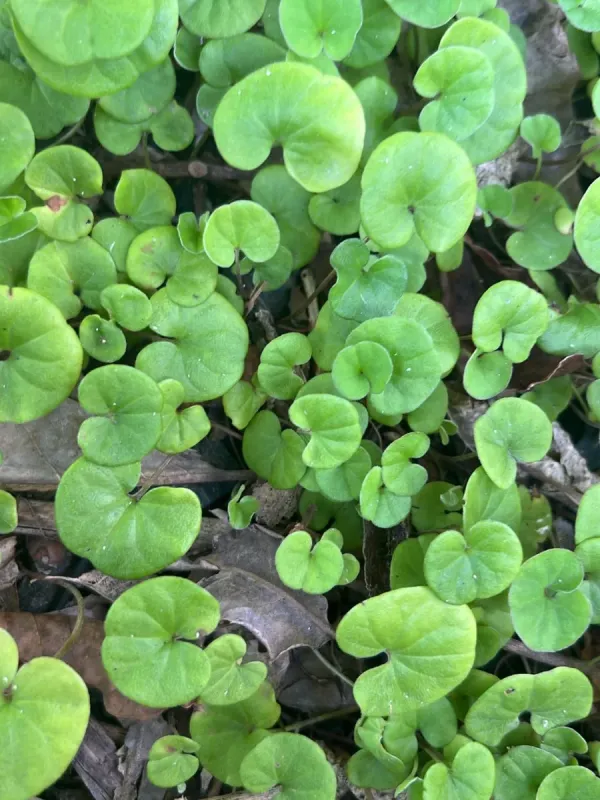
Dichondra repens belongs to the Convolvulaceae family and is a low-growing perennial herbaceous plant with creeping stems. In horticulture, it is valued as an ornamental groundcover plant capable of creating a dense "living carpet" or cascading forms in container gardening.
Growing requirements
The crop prefers sunny areas, but it is capable of tolerating partial shade, making it versatile for various landscape zones. In the absence of sufficient lighting, stems can stretch excessively, losing their decorative density.
Dichondra requires moderately moist, well-drained soils with a neutral or slightly acidic pH. Water stagnation is destructive to the plant's root system and can provoke the development of rot.
Agrotechnics include regular but moderate watering: the plant is capable of withstanding short-term drought, but a stable level of humidity is necessary to maintain bright foliage color and fast growth.
For intensive formation of green mass, nitrogen fertilizers are applied during the period of active vegetation every two to three weeks. An important element of care is trimming, which stimulates branching and makes the dichondra lawn denser.
In temperate climates, Dichondra repens does not overwinter in open ground as its frost resistance is limited. In northern regions, it is grown as an annual or potted plants are brought into heated rooms during the cold season.
Main diseases and pests
The main threat to the plant is fungal diseases that develop with excessive soil moisture and poor air circulation. Regular humidity control is the main preventive measure.
Among pests, nematodes most often attack the crop, which can significantly slow down growth and lead to the death of affected areas. The appearance of aphids and whiteflies is also possible when grown in protected ground conditions.
Pest control includes the use of broad-spectrum insecticides, and in case of severe nematode infestation, affected plants must be removed from the site. Preventive soil treatment before planting reduces the risk of infection.
Adherence to crop rotation and a correct watering regime can significantly minimize the risk of fungal pathogen infection. It is important to avoid overcrowding of plantings, ensuring optimal ventilation of the foliage.
When the first signs of disease are detected, the use of fungicides aimed at combating root rot and leaf spots is recommended. Healthy planting material is the key to successful crop cultivation.