
Dialytrichia mucronata
Dialytrichia mucronata
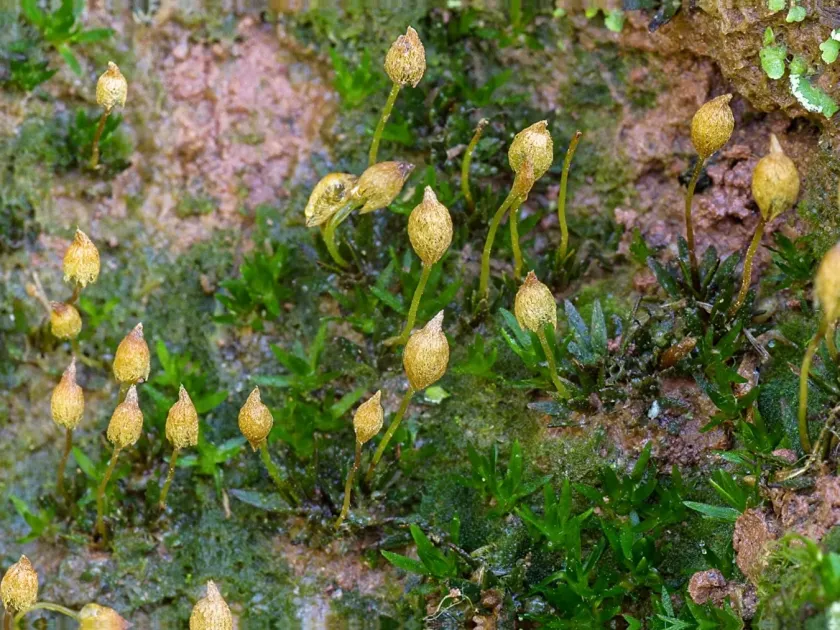
Description
Growing requirements
Dialytrichia mucronata is a moss species belonging to the Pottiaceae family. It is primarily known as an epiphyte or epilith, frequently found on the bark of deciduous trees or limestone substrates in humid environments.
The plant originates from the temperate zones of Europe and Northern Africa. It thrives in regions where atmospheric humidity is relatively high, often colonizing the bases of trees located near rivers, streams, or floodplains.
Botanically, the species forms small, dense tufts ranging from olive-green to dark brown. The leaves are distinctively mucronate at the apex, giving the plant its specific name. The cellular structure of the leaves includes papillae which aid in moisture retention.
The ecological requirements include a preference for sheltered, partially shaded environments. It is often found in sites with a neutral to alkaline pH, particularly when growing on mineral-rich substrates like limestone or concrete walls.
In terms of ecological function, this species contributes to the structural complexity of bark microhabitats. While not a commercial agricultural crop, it acts as a bio-indicator for air quality and forest health within its natural range.
Main diseases and pests
The main threats to Dialytrichia mucronata involve the loss of suitable habitats due to forest management practices. The removal of old-growth trees significantly reduces the available substrate for colonization by this epiphyte.
Air pollution, specifically high concentrations of sulfur dioxide, poses a severe threat to the physiological health of the moss. As a non-vascular plant, it is extremely sensitive to atmospheric chemical changes and acidic precipitation.
Climate change, manifesting as prolonged droughts, is detrimental to the survival of these moss colonies. Since they rely on ambient humidity to complete their life cycles, reduced rainfall can lead to rapid desiccation and mortality.
Competitive displacement by invasive or faster-growing plant species is another factor. Changes in the local micro-climate, such as opening of the canopy due to logging, expose the moss to light levels and evaporation rates that it cannot tolerate.
Conservation of this species depends on maintaining riparian zones and protecting stands of mature, bark-rich deciduous trees. Ensuring that local hydrology remains stable is essential for the long-term survival of its population.