
Deverra tortuosa
Deverra tortuosa
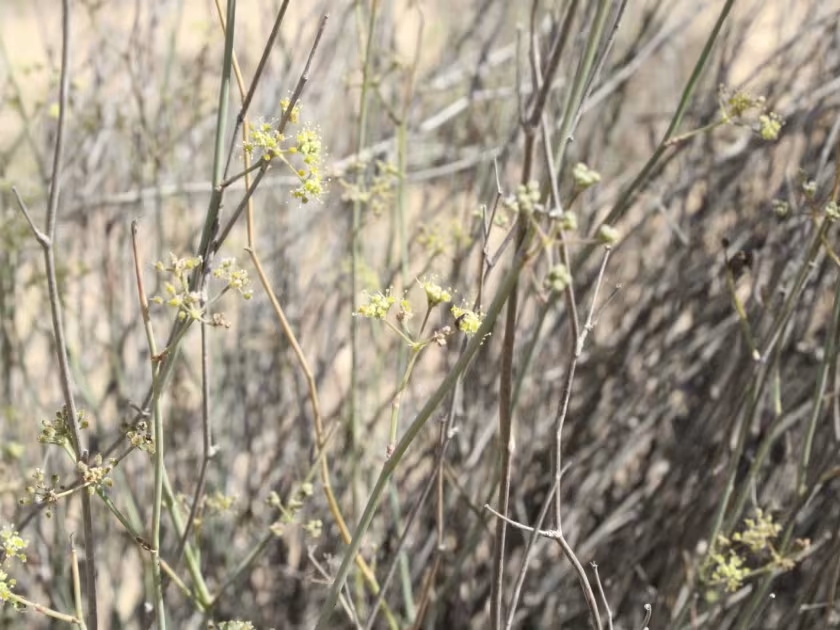
Description
Sowing dates
Sowing of Deverra tortuosa should ideally take place during the spring season when temperatures reach an optimal range for germination, typically between 15 and 20 degrees Celsius. Sandy and well-draining soil is essential to prevent seed rotting before sprouting.
Due to the specific environmental adaptation of this species, seeds often require stratification or a period of dormancy break to ensure uniform emergence. Shallow sowing is recommended, as the seeds respond well to the light exposure typical of their natural habitat.
Spacing between plants must be managed carefully to ensure adequate sunlight, as Deverra tortuosa is a heliophilic species that does not tolerate shading from competing vegetation or close neighbor spacing.
Watering during the early development phase is vital for establishing the primary root system. Once the seedlings have reached a robust state, they become largely self-sufficient, relying on deep root penetration to access moisture from soil layers.
While the species is hardy, protecting young crops from intense weed competition is necessary during the first few weeks, as the plant exhibits relatively slow initial growth before it establishes a stable vegetative frame.
Growing requirements
Deverra tortuosa, belonging to the Apiaceae family, is a desert subshrub native to the arid landscapes of North Africa and the Middle East. It is highly adapted to extreme survival in environments with scarce water and harsh solar radiation.
The plant thrives in rocky, sandy, or saline soils that would be hostile to most agricultural crops. Its ability to tolerate low soil fertility makes it an excellent candidate for cultivation in degraded arid zones.
Climate requirements include high temperatures and low relative humidity. The species is sensitive to waterlogging, as its roots are specialized for deep water extraction rather than surviving in stagnant, anaerobic soil conditions.
Optimal growth is achieved in open, exposed areas where the plant receives unobstructed sunlight. Any attempts to cultivate the plant in containers or greenhouses require strict adherence to drainage management.
It is generally resilient to both extreme heat and cold fluctuations typical of desert climates, requiring minimal intervention in terms of temperature regulation once the plant is mature.
Yield
The primary economic value of Deverra tortuosa lies in its production of secondary metabolites, specifically essential oils extracted from its stems and flowers. These substances have significant potential in traditional medicine and pharmaceutical applications.
The plant also serves a crucial ecological function by stabilizing soil and preventing wind erosion in desertified regions. Cultivating this species can contribute to long-term soil improvement and land rehabilitation.
Though not a primary forage crop, it serves as an emergency food source for livestock like camels and goats in regions where other vegetation is non-existent, highlighting its importance for pastoral economies.
The medicinal properties, including antiseptic and carminative effects, drive the demand for harvesting the plant from the wild or small-scale cultivation, making it a niche but valuable product for local markets.
Harvesting efficiency is improved by selecting high-density patches of mature shrubs, which can yield a consistent supply of dried biomass for essential oil distillation and medical use.
Main diseases and pests
The main threats to Deverra tortuosa are fungal infections such as root rot, which are almost exclusively caused by improper irrigation or poor site drainage. Managing moisture is the most effective form of prevention.
Insects and pests are generally deterred by the strong chemical profile of the plant, including terpenes and other aromatic compounds. This natural defense reduces the need for synthetic chemical pesticides in the fields.
Weeds are the primary threat during the establishment phase, as they compete for limited nitrogen and water. Mechanical weeding is the preferred method for maintaining clear rows in a sustainable farming model.
The use of heavy synthetic fertilizers is discouraged, as it can disrupt the plant's natural metabolic balance and make it more attractive to aphids or mites, which are rare but potential threats in non-native environments.
Environmental management, including maintaining plant health through proper spacing and airflow, is sufficient to keep most pest and disease issues at a manageable level without resorting to harsh chemicals.
Harvesting
Harvesting is conducted during the full flowering stage, as this is when the concentration of essential oils in the tissues is highest. Plants are typically cut, leaving the rootstock intact for regrowth.
Drying the harvested material should occur in a shaded, ventilated environment to prevent the degradation of volatile compounds by direct sunlight and high heat, ensuring the quality of the end product.
Seed collection requires careful timing, targeting the period when the pods turn brown but before they shatter. This is best done in dry, calm weather to avoid seed loss in the field.
Cleaning the harvested biomass to remove sand and soil is essential to maintain the purity of the raw material, as contaminants can negatively affect the oil distillation process.
Storage should be performed in breathable containers to allow for moisture escape while keeping the material away from sunlight and high temperatures, which helps preserve its medicinal properties for extended periods.