
Deverra scoparia
Deverra scoparia
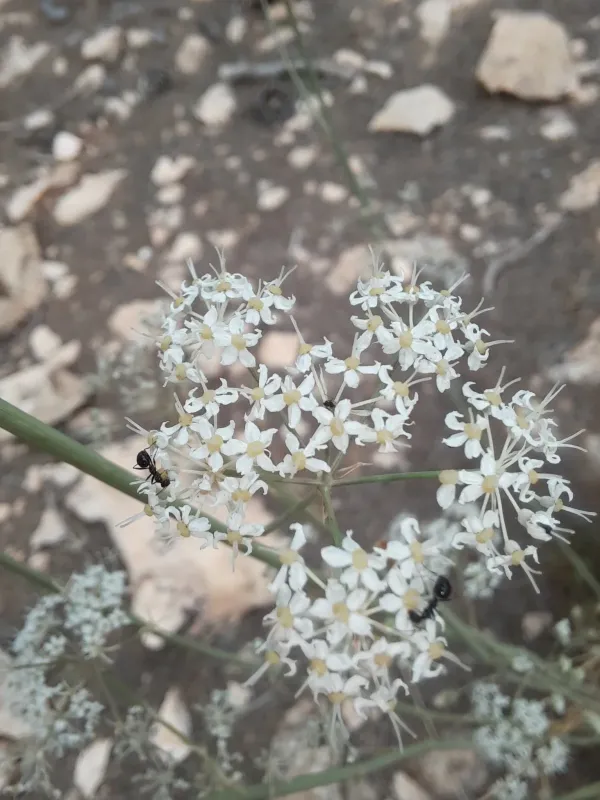
Description
Growing requirements
Deverra scoparia is a perennial subshrub belonging to the Apiaceae family. It is natively distributed across the arid regions of North Africa and the Middle East, showcasing extreme resilience.
Botanically, the plant is characterized by its broom-like appearance with significantly reduced foliage. Photosynthesis is carried out primarily by the green stems, an adaptation to minimize water loss.
The species thrives in sandy, rocky, and saline soils where few other plants can survive. It requires high solar irradiance and avoids waterlogged environments, which are detrimental to its root system.
The root system of Deverra scoparia is extensive, capable of tapping into deep groundwater reserves. This allows the plant to remain active even during prolonged periods of drought.
Cultivation requires minimal intervention. It does not demand high-nutrient soils, making it an excellent candidate for stabilizing degraded lands and desertification control.
Yield
The economic utility of Deverra scoparia is multifaceted, focusing on medicinal extracts and essential oils. The green parts of the plant are harvested to obtain active pharmaceutical ingredients.
Traditional medicine utilizes extracts as diuretics and anti-inflammatory agents. Harvesting is strategically timed to correspond with the flowering stage to maximize the yield of volatile oils.
In industry, its essential oils serve as natural flavoring agents. The unique chemical profile of the oil contributes to its demand in niche fragrance and food production markets.
In pastoral regions, the plant is utilized as emergency forage for livestock, particularly camels. Its mineral content provides essential nutrients in a diet that is otherwise limited by sparse vegetation.
The plant serves as a vital component in erosion control. Its dense root structure helps prevent soil displacement and provides protection for topsoil in windy, arid environments.
Main diseases and pests
The most significant threat to Deverra scoparia populations is overgrazing and the lack of regulated harvesting practices. Habitat fragmentation also poses a long-term risk to its survival.
While the species is hardy against most pests, soil pathogens can become an issue if environmental conditions are improperly manipulated, specifically through excessive watering.
There are no major fungal or viral diseases that systematically threaten this plant under natural conditions. Its high secondary metabolite content acts as a natural deterrent against many herbivores.
Climate change, manifesting as intensified desertification, puts pressure on existing populations. Conservation of its natural habitats is crucial for maintaining genetic diversity.
Sustainable management programs are required to balance its economic harvest with conservation needs. Over-exploitation without replanting can lead to localized extinction of the species.