
Balanites aegyptiacus
Balanites aegyptiacus (L.) Delile
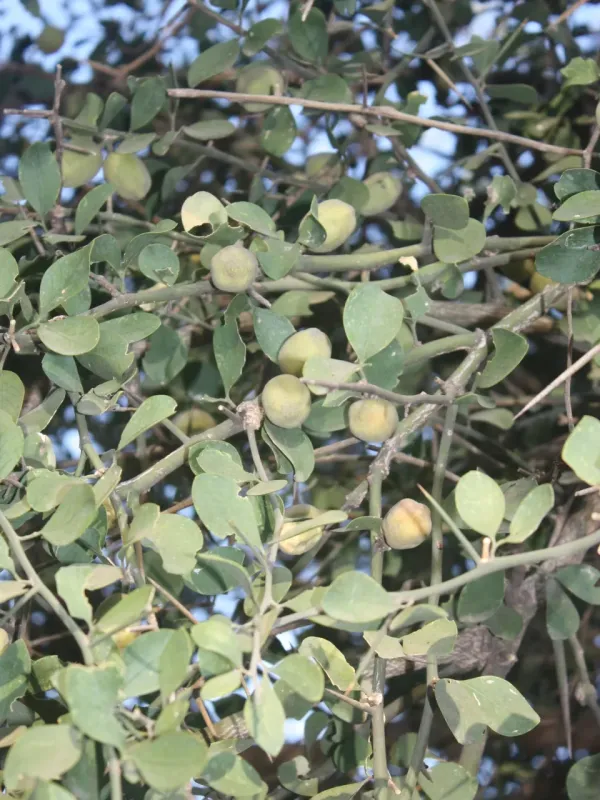
Description
Sowing dates
Propagation of Balanites aegyptiacus is primarily achieved through seeds, which exhibit high viability immediately after harvesting but lose their germination capacity over time.
Scarification of the hard endocarp is highly recommended to accelerate the germination process. Seeds should be planted in well-drained nursery containers or directly into prepared soil.
Seedlings are best transplanted to their permanent locations at the beginning of the rainy season to allow the deep root system to establish before the onset of extreme arid conditions.
For plantation purposes, trees should be spaced approximately 6 to 8 meters apart. This spacing ensures adequate light penetration and reduces competition for groundwater between mature specimens.
During the first year, young plants require supplemental watering until their primary taproot reaches the moisture-rich layers of the subsoil, ensuring their survival in dry climates.
Growing requirements
Balanites aegyptiacus is a member of the Zygophyllaceae family, well-adapted to the harsh, arid environments across Africa and parts of the Middle East.
The tree is remarkably versatile regarding soil types, thriving in light sandy soils, heavy clay, or even saline conditions where most crops would fail to survive.
Its drought resistance is legendary; the tree utilizes its deep taproot and specific physiological adaptations to store moisture, enabling it to survive long dry seasons.
The optimal temperature for growth ranges between 25°C and 35°C, although the species is hardy enough to withstand extreme heat and occasional light frost without significant damage.
This species is an essential component of arid-zone agroforestry, as it provides shade, stabilizes soil, and acts as a windbreak against intense desert dust storms.
Yield
Productivity in Balanites aegyptiacus varies significantly depending on age and site conditions, with a mature tree typically producing between 30 and 50 kilograms of fruit per season.
The yield is cyclic and heavily dependent on rainfall during the flowering period, which determines the overall quantity and quality of the setting fruit.
Often referred to as the "desert date," the fruit is a vital food source, rich in essential carbohydrates, proteins, and various vitamins necessary for nutrition in arid regions.
Beyond the pulp, the seeds are highly valued for their high-quality oil content, which is used extensively in both traditional cooking and the modern cosmetic industry.
Sustainable plantation management, including selective pruning and irrigation during extreme dry spells, can significantly boost the overall economic output per hectare.
Main diseases and pests
The primary threats to Balanites aegyptiacus include specific insect larvae that bore into the ripening fruit, significantly reducing the marketable yield and seed quality.
Fungal leaf spot diseases can occur during periods of unseasonable high humidity, causing premature defoliation and stressing the overall health of the tree.
Young saplings are highly vulnerable to browsing by goats and other livestock; therefore, protecting the planting area with fencing is essential during the early establishment phase.
Parasitic plants, such as mistletoe, may infest branches of older trees, acting as a drain on nutrients and potentially leading to the death of affected branches over time.
Effective pest control involves regular monitoring and the removal of affected plant parts to maintain the overall hygiene and vitality of the plantation grove.
Harvesting
Harvesting usually occurs when the fruit reaches physiological maturity, characterized by a change to brown color and a softer texture, or when they drop naturally to the ground.
Manual harvesting is the preferred method as it preserves the integrity of the fruit and avoids the bruising that occurs when they drop onto hard desert soil.
Once harvested, the fruit is cleaned and sun-dried to reduce moisture content, preventing the development of mold and ensuring a longer shelf life for storage.
The seeds are then extracted and sorted before mechanical extraction of oil, ensuring that only healthy, non-infested kernels are used for high-value production.
Proper harvest management is crucial for the economic viability of the crop, enabling consistent supply chains for both fruit pulp and the valuable kernel oil.