
Deprea subtriflora
Deprea subtriflora
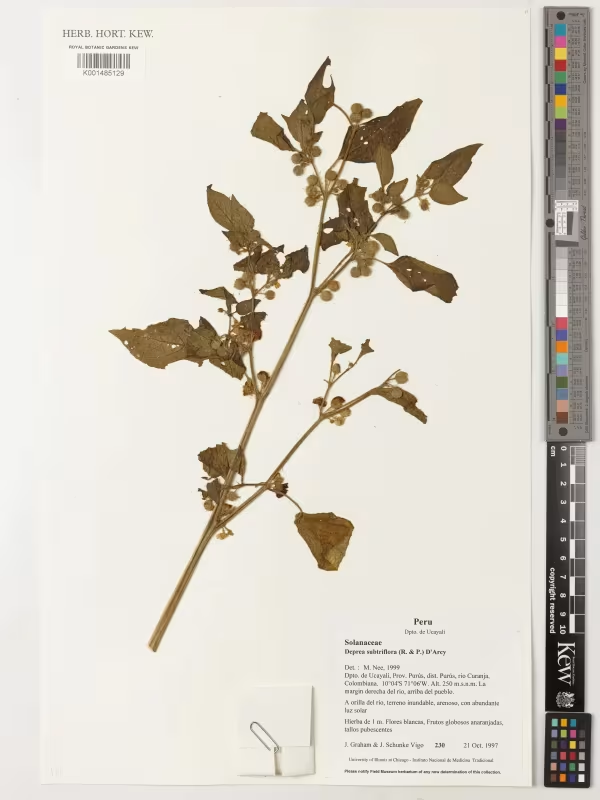
Description
Growing requirements
Deprea subtriflora is a distinctive botanical species belonging to the Solanaceae family. Native to the mountainous Andean regions of South America, this perennial plant has evolved to thrive in high-altitude environments where climatic conditions remain relatively cool and consistent.
To cultivate this species successfully, one must replicate its natural habitat requirements. This involves maintaining moderate ambient temperatures and ensuring sufficient, but not excessive, soil moisture. The plant is particularly sensitive to extreme heat and prolonged direct sun exposure.
Soil quality is paramount for the health of Deprea subtriflora. It thrives best in well-draining, nutrient-rich substrates with a slightly acidic to neutral pH. Adequate drainage is essential to prevent root rot, a common issue for many plants within the Solanaceae family when exposed to waterlogged conditions.
Botanically, the plant exhibits features typical of the Physalideae tribe. It produces berry-like fruits encased in calyx structures, which provide protection during the development phase. The plant's structural growth typically consists of a branching habit that may require support as the foliage matures.
Currently, the agricultural utility of Deprea subtriflora is limited to niche botanical study and potential ornamental use. Understanding its life cycle and precise nutritional needs continues to be a subject of interest for researchers specializing in rare and exotic nightshade varieties.