
Deplanchea tetraphylla
Deplanchea tetraphylla
Description
Sowing dates
Propagation of Deplanchea tetraphylla in agricultural settings is typically achieved through seeds or stem cuttings within a controlled greenhouse environment.
The seeds of this species have limited viability, therefore it is recommended to sow them immediately after harvesting into a well-draining, nutrient-rich substrate.
Successful germination requires soil temperatures between 25 and 30 degrees Celsius, accompanied by consistently high humidity levels.
In its natural habitat, the tree can reproduce naturally, but for commercial production, seed stratification or pre-soaking may be employed to improve germination rates.
Young seedlings should be transplanted to open ground only after achieving sufficient lignification, ensuring the root system is robust enough for establishment.
Growing requirements
Deplanchea tetraphylla is a member of the Bignoniaceae family, reaching the size of a large tree in the wild, which necessitates significant space for canopy expansion.
This is a strictly tropical species that relies heavily on frost-free conditions and high atmospheric moisture throughout its entire growing season.
Optimal growth is observed in deep, fertile, loamy soils characterized by excellent aeration and a neutral to slightly acidic pH level.
To encourage its signature profuse flowering, the tree requires full sun exposure and protection from strong, desiccating winds that could damage the inflorescences.
Agricultural management includes regular fertilization with balanced nutrient solutions during the active growth phase to ensure the plant thrives in its environment.
Yield
The primary horticultural use of Deplanchea tetraphylla lies in ornamental landscaping, park development, and garden design within tropical regions.
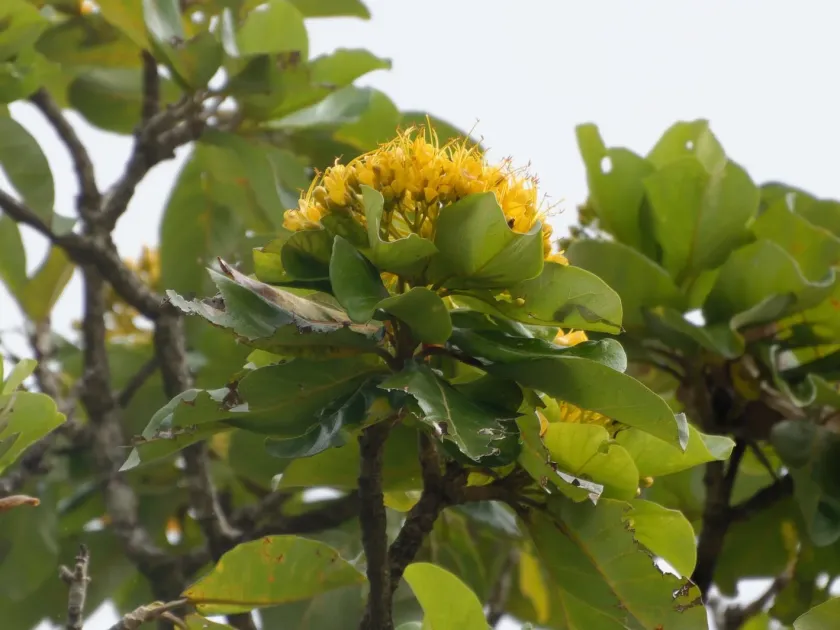
Its main value is derived from its unique, massive golden-yellow inflorescences, often called "golden bouquets," which serve as major pollinator magnets.
In some indigenous regions, the wood of this tree is utilized in small-scale construction due to its inherent hardness and long-term durability.
The "productivity" of this species is measured not by harvest mass, but by the intensity and duration of its floral display during the peak season.
The tree shows promise in agroforestry systems, where it can provide structural canopy layers for shade-tolerant understory crops.
Main diseases and pests
Primary health threats to Deplanchea tetraphylla include root rot caused by fungal pathogens when the soil remains saturated for extended periods.
In environments with excessive humidity and poor airflow, foliage can become susceptible to powdery mildew, requiring the use of systemic fungicides.
Pests such as whiteflies and scale insects represent the most significant threat, as they proliferate rapidly in poorly pruned or overly dense canopy foliage.
To mitigate pest infestations, periodic sanitary pruning is essential to improve air circulation and sunlight penetration throughout the crown.
Implementing integrated pest management practices, including the release of beneficial insects, is highly recommended to maintain environmental stability.