
Dendropemon purpureus
Dendropemon purpureus
Description
Growing requirements
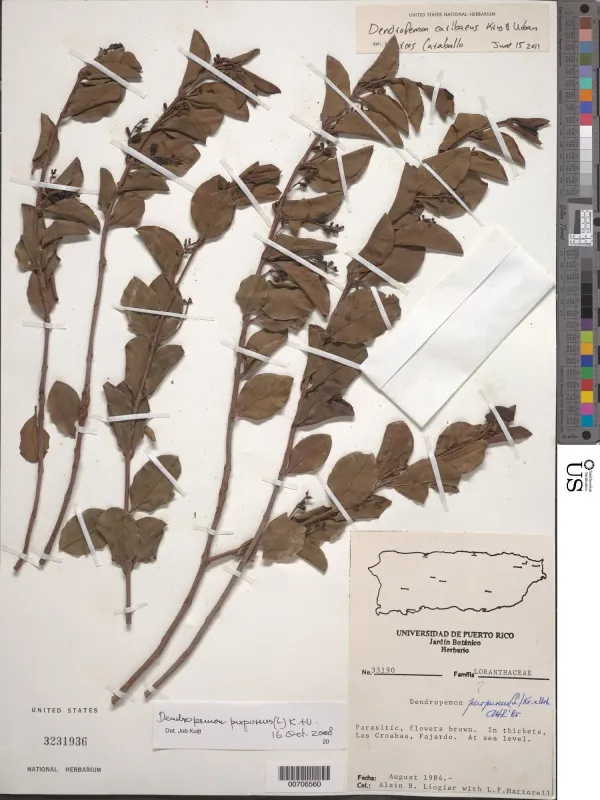
Dendropemon purpureus is a species of hemi-parasitic plant belonging to the Loranthaceae family. Unlike conventional agricultural crops, this plant does not grow in the soil but survives by attaching itself to the branches of various host trees found in its native ecosystem.
The geographical distribution of this species is primarily focused on the Caribbean region. It thrives in tropical climates where high humidity levels and constant temperatures support its continuous growth and reproductive cycles throughout the year.
Botanically, it is characterized by leathery, opposite leaves and distinct, vibrant purple-colored flowers. These floral structures are specialized to attract specific pollinators, ensuring the successful fertilization and subsequent development of its fleshy fruits.
The plant functions by developing specialized parasitic roots known as haustoria. These structures penetrate the bark of the host tree to reach the vascular system, allowing the plant to extract water and essential nutrients directly from the host's sap stream.
Dissemination is largely carried out by avian species that consume the fruit. The sticky seeds are transported and deposited onto other branches, where they successfully germinate and establish new clusters, contributing to the expansion of the population within the forest canopy.