
Daphne pontica
Daphne pontica
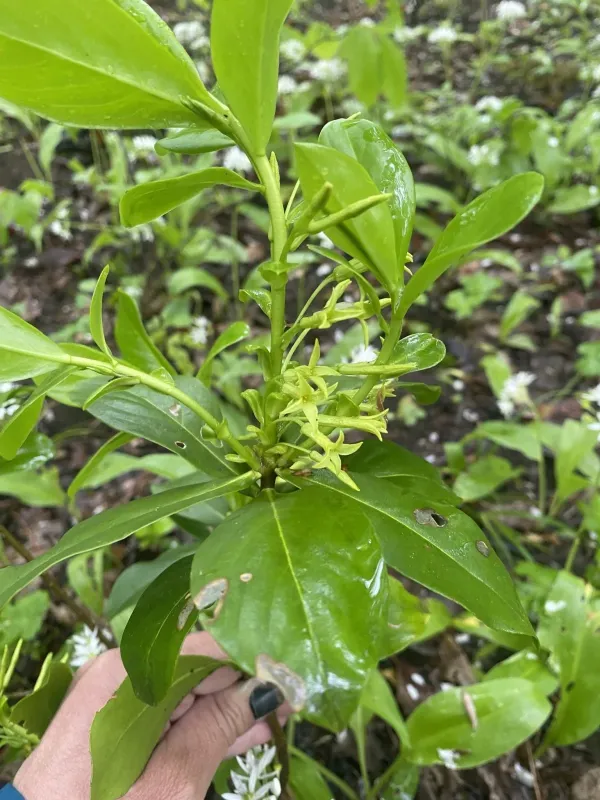
Description
Growing requirements
Daphne pontica is an attractive evergreen shrub belonging to the Thymelaeaceae family. Its natural habitat is spread across the forested regions of the Caucasus and Northern Turkey, where it thrives in moist, shaded environments under forest canopies.
Botanically, this species is defined by its leathery, dark green foliage that remains consistent throughout the seasons. It typically grows to a height of about 1 to 1.5 meters, forming a dense and rounded structure that adds structural interest to woodland or shade gardens.
The cultivation of this shrub requires well-drained, nutrient-rich soils that maintain constant moisture without becoming waterlogged. Successful establishment depends heavily on providing a substrate that mimics its native forest floor environment, often enriched with leaf mold or organic compost.
In terms of climate, Daphne pontica prefers locations with partial to full shade. Direct exposure to intense afternoon sunlight often results in scorched leaves and excessive water loss, making it unsuitable for open, arid sites where heat accumulation is high.
Standard horticultural practices include maintaining a layer of organic mulch around the root zone to stabilize soil moisture and temperature. Propagation is generally achieved through cuttings, as growing from seed is often unreliable due to dormancy requirements and slow germination rates.
Main diseases and pests
The most significant threat to Daphne pontica is root rot, which is almost exclusively caused by poor drainage or excessive watering. Once the root system begins to decay, the shrub rapidly declines, making preventative drainage solutions essential at the time of planting.
Fungal diseases, such as leaf spot or grey mold, can emerge during periods of high humidity and poor air circulation. Pruning for better air movement and avoiding overhead watering are key strategies to minimize the risk of infection in dense garden settings.
Common pests like aphids and spider mites can attack new growth during the spring. While the plant possesses natural chemical defenses, localized infestations can still cause significant stress to the shrub, requiring periodic monitoring and appropriate pest management.
It is vital to emphasize that all parts of Daphne pontica are highly toxic if ingested and can cause severe skin irritation upon contact. Gardeners should always wear gloves when pruning or handling the plant to prevent dermatological reactions from the plant's sap.
Due to its toxicity, this plant should be used with caution in family gardens or public spaces. Ensuring that the shrub is situated away from footpaths or areas where children and pets play is a necessary precautionary measure for safe landscape management.