
Daphne mantensiana
Daphne mantensiana
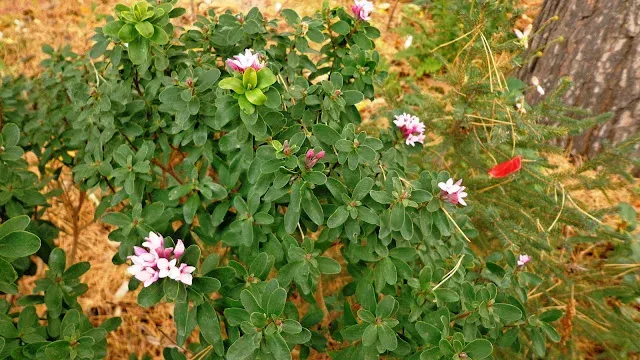
Description
Growing requirements
Daphne mantensiana is a highly regarded hybrid evergreen or semi-evergreen shrub belonging to the Thymelaeaceae family. Bred as a cross between D. burkwoodii and D. retusa, this plant combines structural elegance with exceptional flowering traits.
The shrub thrives in partial shade, specifically preferring locations that provide protection from intense, direct afternoon sunlight. It demands well-draining, humus-rich soil that is slightly acidic or neutral; moisture retention is important, but waterlogging is fatal to the plant's root system.
Morphologically, Daphne mantensiana develops a dense, mounded habit, usually growing to a height and width of 60–90 cm. Its leaves are narrow, leathery, and dark green, providing a beautiful backdrop for its clusters of intensely fragrant, violet-pink tubular flowers that bloom in late spring.
In terms of хозяйственного (landscaping) utility, it serves as a spectacular specimen plant for rock gardens, small borders, or foundation plantings. Its slow growth rate makes it a low-maintenance choice for gardeners who prefer structured, neat-looking landscapes.
Gardeners must exercise caution, as all parts of Daphne mantensiana are toxic. It is essential to wear gloves when pruning or handling the plant to prevent skin irritation from the plant's sap and to ensure children and pets do not consume any part of the shrub.
Main diseases and pests
The most significant threat to the health of this Daphne variety is root rot, typically caused by poor drainage or excessive soil moisture. Once a fungal pathogen compromises the root system, the decline of the shrub is often rapid and difficult to reverse.
Pests such as aphids often congregate on the succulent new growth during the spring, while spider mites may become a problem during hot, dry summer months. Regular observation is necessary to catch infestations before they cause significant damage to the foliage.
To prevent diseases, ensure that the soil has excellent aeration. Planting the shrub on a slight slope or in a raised bed can significantly reduce the risk of water buildup around the crown of the plant, which is a common site for fungal infections.
Chemical control involving systemic insecticides is effective against aphid and mite outbreaks. If signs of fungal dieback appear, remove the infected branches immediately and apply a recommended fungicide to treat the surrounding soil and plant tissues.
Consistent care, including mulching to keep roots cool and balanced watering, remains the best defense against pests and diseases. By prioritizing proper site selection and soil preparation, the Daphne mantensiana can flourish for many years in the garden.