
Dalhousiea bracteata
Dalhousiea bracteata
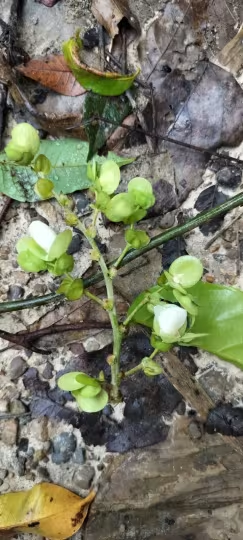
Description
Growing requirements
Dalhousiea bracteata is a woody plant species classified within the Fabaceae (legume) family. Native to the tropical regions of Southeast Asia, this plant is typically found in dense forests where it thrives under specific ecological conditions.
The culture requires a tropical climate characterized by consistently high temperatures and significant annual rainfall. It is perfectly adapted to environments where air humidity remains elevated throughout the growing season, which supports its physiological processes.
Regarding soil requirements, this species performs best in deep, well-draining, and nutrient-rich soils. A loamy texture is generally preferred, as it balances the need for water retention with the necessity of preventing waterlogging, which could damage root health.
Agrotechnical practices involve careful management of shade and moisture levels during the early development stages. Because it originates from forest habitats, it benefits significantly from partial shade, protecting it from intense direct solar radiation.
The plant serves various purposes in local economies, ranging from medicinal applications in traditional practices to ornamental uses in managed tropical landscapes. Its distinct botanical structure and floral display make it a subject of interest for conservation and research in tropical horticulture.