
Dalechampia scandens
Dalechampia scandens
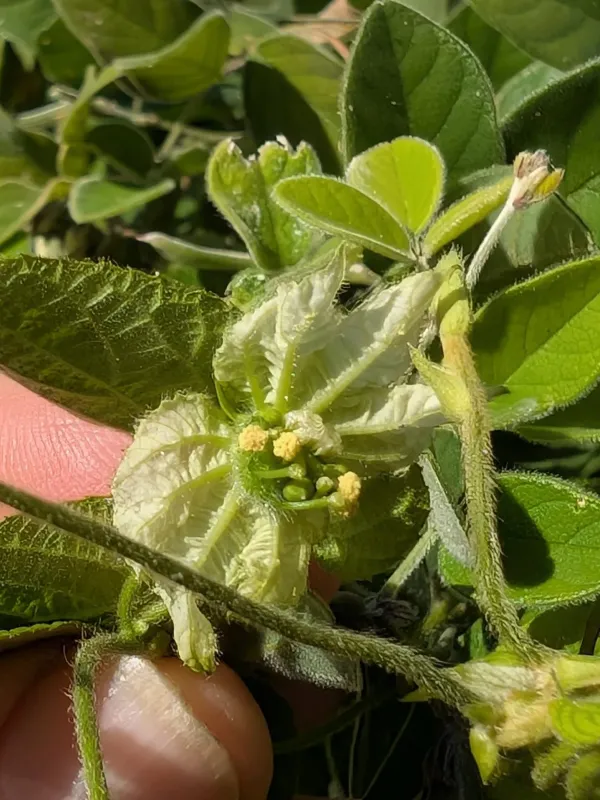
Description
Growing requirements
Dalechampia scandens is a perennial herbaceous vine belonging to the Euphorbiaceae family. Known for its distinct twining growth habit, this plant requires sturdy trellis systems or other support structures to reach its full development potential.
Native to tropical America and Africa, the plant thrives in warm and humid environments. Its distribution spans across diverse geographical zones, which has shaped its botanical adaptation to forest margins and light-filled canopy gaps.
Cultivation requires strict adherence to temperature parameters, ideally between 20°C and 28°C. Being a tropical species, it is highly sensitive to cold stress and must be protected from frost, making it suitable for greenhouses or controlled indoor environments in cooler climates.
The soil should be well-draining, rich in organic matter, and slightly acidic. Frequent irrigation is necessary during the active growing phase, though it is crucial to avoid waterlogging, which significantly increases the risk of root rot pathogens.
Light management is a critical aspect of plant maintenance. While the species requires ample light, it is best provided as filtered or dappled sunlight. Intense direct sun exposure can lead to leaf scorching, especially when ambient humidity is not high enough.
Main diseases and pests
The plant is susceptible to common greenhouse pests such as spider mites, aphids, and mealybugs. These pests are particularly active during periods of low atmospheric humidity, often requiring regular monitoring and integrated pest management strategies.
Root system health is frequently threatened by fungal diseases, specifically those caused by over-irrigation. Pathogens such as Pythium find conducive environments in dense, poorly aerated soils where drainage is insufficient.
Foliar infections, including various types of leaf spots, can manifest if air circulation is inadequate. High humidity coupled with lack of ventilation creates a perfect microclimate for bacterial and fungal proliferation on the foliage.
To control pest infestations, growers should utilize certified acaricides and insecticides applied according to the development cycle of the insects. Preventive treatments are more effective than curative measures in intensive production environments.
Sanitation practices, including the removal of dead plant debris and sterilization of propagation tools, are vital for disease control. Maintaining an optimal microclimate is the primary defense strategy against the majority of physiological and pathological threats.