
Dalbergia cultrata
Dalbergia cultrata
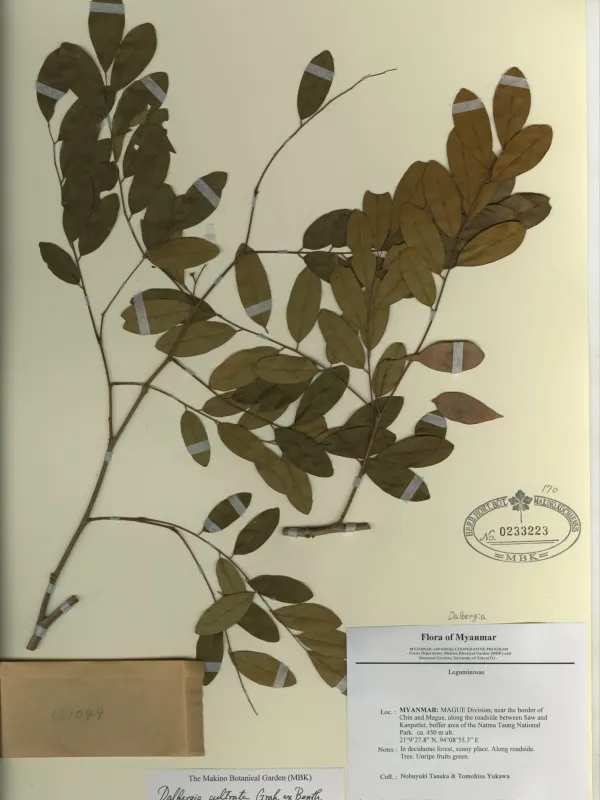
Description
Growing requirements
Dalbergia cultrata is a notable member of the Fabaceae family, native to the tropical monsoon forests of Southeast Asia, including countries like Myanmar and Thailand.
The tree thrives in well-drained soils and is typically found in habitats that experience distinct wet and dry seasons, which are critical for its physiological development.
As a light-demanding species, it requires significant exposure to sunlight to maintain healthy growth rates, especially during the early stages of its establishment.
The climate must be tropical or subtropical, characterized by consistently warm temperatures throughout the year to support the metabolic functions of this hardwood species.
Agronomic management of this tree species involves careful soil preparation and site selection, given its specific requirements for good drainage and light availability.
Harvesting
The primary economic application of Dalbergia cultrata is the production of high-quality timber, often categorized among the valuable rosewood and ebony-like wood types.
Its wood is highly sought after for its exceptional hardness, durability, and deep coloration, making it a premium material for furniture making and fine woodworking.
Musical instrument makers frequently use this species to create components that require high density and acoustic resonance, enhancing the value of the finished products.
Sustainable harvesting of Dalbergia cultrata is increasingly important, as many species within this genus face pressures from over-exploitation in their natural ranges.
Future agricultural efforts are directed toward sustainable plantation silviculture, aiming to provide a reliable supply chain while ensuring the conservation of forest biodiversity.