
Crowfoot grass
Dactyloctenium aegyptium (L.) Willd.
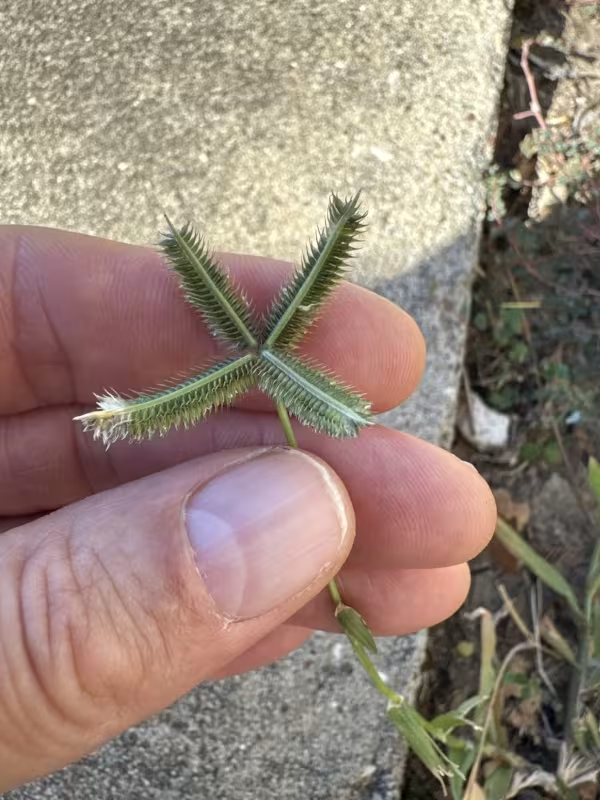
Description
Growing requirements
Dactyloctenium aegyptium, commonly known as crowfoot grass, belongs to the Poaceae family. It is an annual grass species native to Africa and Asia, widely naturalized in tropical and subtropical regions across the globe.
The plant thrives in open, sunny habitats with sandy or well-drained loamy soils. It demonstrates a remarkable ability to withstand extreme heat and salt stress, allowing it to colonize disturbed areas where other species might struggle.
Physiologically, it is a C4 plant, which explains its high efficiency in water use and carbon assimilation during periods of intense sunlight and high temperatures. Its growth is most vigorous when temperatures range from 25°C to 35°C.
The botanical architecture of the plant is characterized by its stoloniferous habit, where stems spread horizontally, rooting at nodes. This feature makes it highly invasive and difficult to remove mechanically once established.
Agricultural management requires early intervention. Because of its prolific seed production, the primary goal for farmers is to control the plant before the inflorescences fully mature and disperse seeds into the soil bank.
Main diseases and pests
Crowfoot grass is susceptible to common grass diseases, including rusts (Puccinia spp.) and leaf blight. While these diseases rarely kill the plant, they can reduce its biomass and nutritional value if it is intended for fodder.
Insect pests such as grasshoppers and various species of caterpillars frequently feed on the succulent leaves. In some regions, root-feeding nematodes pose a significant threat to the plant's health and stability.
The species acts as a secondary host for several mosaic viruses that can devastate commercial crops like maize and sorghum. This makes the containment of the weed essential for integrated pest management.
Farmers should implement strict weed monitoring programs in the early spring. Chemical control is often effective if performed using post-emergence herbicides before the plant enters the reproductive phase.
Integrated control measures, including crop rotation and the use of cover crops, are recommended to suppress the weed effectively. Preventing soil disturbance helps limit the germination of new seeds.