
Dactylicapnos scandens
Dactylicapnos scandens (D. Don) Hutch.
Description
Sowing dates
Seeds of Dactylicapnos scandens are typically sown in early spring, once the danger of frost has passed for outdoor planting.
Cold stratification is highly recommended for these seeds, as it breaks dormancy and ensures a more uniform germination rate.
Use a well-drained, sterile seed-starting mix to prevent damping-off, a common issue with delicate seedlings in this family.
Seeds should be covered lightly with soil, as they require a certain level of ambient light to initiate the germination process.
Transplant seedlings into individual pots once they reach the two-leaf stage, providing them with small bamboo stakes for support.
Growing requirements
This species belongs to the Papaveraceae family and is native to the Himalayas, growing naturally in mountain forests and ravines.
Dactylicapnos scandens thrives in cool to temperate climates, preferring dappled shade rather than scorching direct sunlight.
The ideal soil is rich, moisture-retentive, and slightly acidic, mimicking the forest floor conditions of its native habitat.
Consistent moisture is essential, though the soil must never remain waterlogged, as the roots are sensitive to anaerobic conditions.
Support structures like trellis or wire mesh are necessary for the plant to climb effectively using its sensitive, grasping tendrils.
Yield
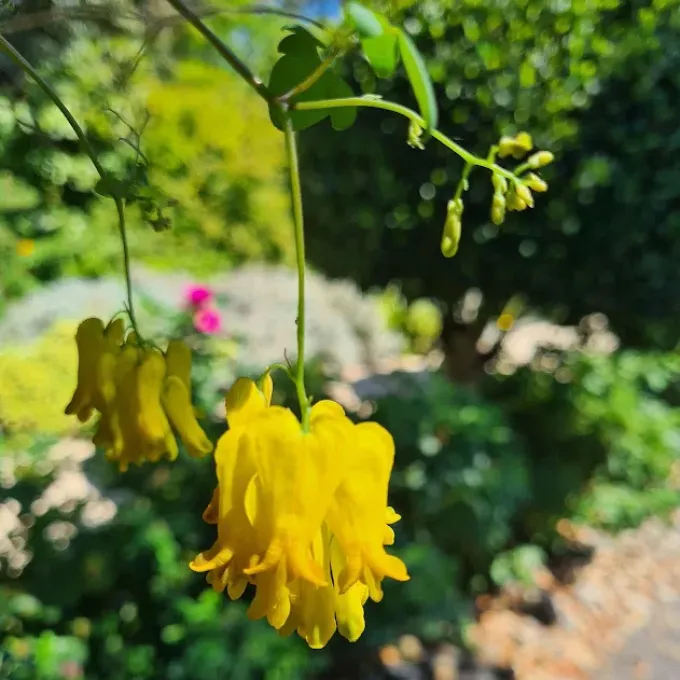
Primarily used in ornamental landscaping, this plant is valued for its elegant, climbing habit and pendulous, golden-yellow flowers.
In optimal garden conditions, a single plant can produce a vigorous vertical display reaching heights of up to 3 meters within one season.
The aesthetic output includes both the fine, divided foliage and the decorative, inflated fruit capsules that appear after flowering.
While not a commercial food crop, it serves as a high-value ornamental species for collectors of unique Himalayan flora.
Productivity in a landscape context is measured by the plant's ability to cover walls and fences rapidly during the active growing season.
Main diseases and pests
Common horticultural pests, including aphids and spider mites, may target the succulent stems and leaves, especially in warm, dry climates.
Fungal pathogens such as root rot can develop if the growing medium is kept excessively moist without adequate oxygen flow.
Integrated pest management, including regular inspection and soap-based sprays, is often sufficient to control minor pest outbreaks.
To prevent disease, it is vital to ensure good air circulation around the foliage and to avoid splashing water onto the leaves during irrigation.
Providing the plant with its preferred cooler environment significantly reduces stress and improves its overall resistance to pathogens.