
Ardoin's broom
Cytisus ardoinii
Description
Growing requirements
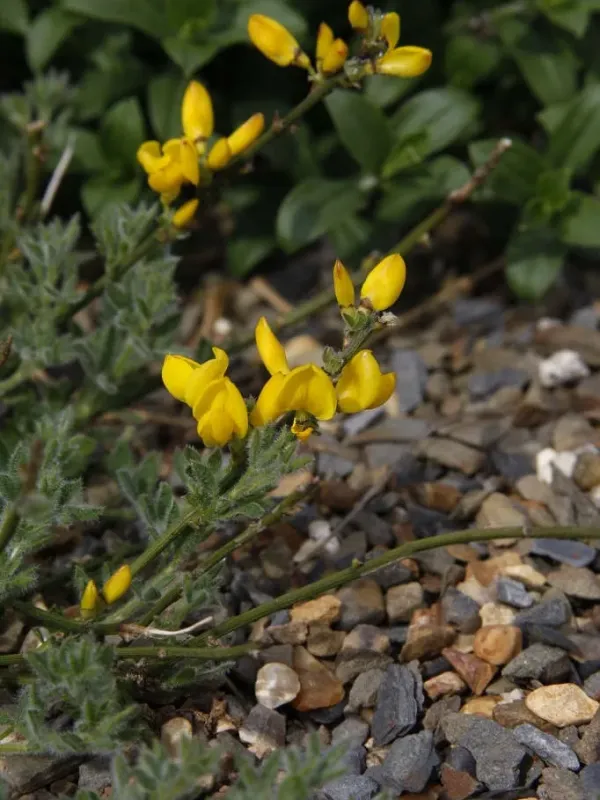
Ardoin's broom (Cytisus ardoinii) is a low-growing, mat-forming deciduous shrub belonging to the Fabaceae family. Originating from the rocky slopes of the Maritime Alps in France, this plant is naturally adapted to harsh, nutrient-poor environments.
To cultivate this species successfully, one must replicate its native habitat by providing excellent drainage. It thrives in gravelly or sandy soils that prevent waterlogging, which is the primary cause of plant loss in domestic gardens.
The plant requires full sun exposure to produce an abundance of its characteristic bright yellow flowers. In shaded conditions, the plant tends to lose its dense growth habit and produces significantly fewer blossoms during the spring season.
This species is highly drought-tolerant once established, making it a sustainable choice for xeriscaping. It does not require frequent fertilization, as excessive soil nutrients can negatively impact its longevity and flowering performance.
Its primary horticultural use is in rock gardens, alpine beds, and on dry retaining walls where its cascading stems can soften hard landscaping features. It provides significant aesthetic value during the late spring flowering period.
Main diseases and pests
Cytisus ardoinii is generally robust but can suffer from root rot if planted in heavy, clay-based soils that retain too much moisture. Improving soil structure with grit or coarse sand is the most effective preventative measure.
Powdery mildew may occur during seasons with high humidity and poor ventilation. Keeping the planting site open and ensuring proper spacing between plants will help mitigate this common fungal issue.
Aphids can sometimes colonize the tender spring growth, potentially leading to leaf distortion and secondary infections. Early intervention with insecticidal soaps or horticultural oils is recommended to keep infestations under control.
Regular sanitation of the site by removing fallen debris prevents the buildup of pathogens. It is essential to keep the base of the plant clear to ensure maximum airflow and sunlight penetration.
Winter injury to the stems can predispose the plant to branch dieback. Pruning away damaged or diseased wood after the danger of frost has passed will help the plant recover and maintain its compact structure.