
Cynomorium
Cynomorium coccineum
Description
Growing requirements
Cynomorium coccineum is an obligate root parasite belonging to the Cynomoriaceae family. This botanical oddity lacks chlorophyll entirely, relying solely on host plants, typically halophytic shrubs like those from the Amaranthaceae family, to sustain its biological functions.
The plant is native to arid regions of the Mediterranean and parts of the Arabian Peninsula. Its growth cycle is deeply tied to the presence of host roots, which it infects using specialized organs called haustoria to extract nutrients and water.
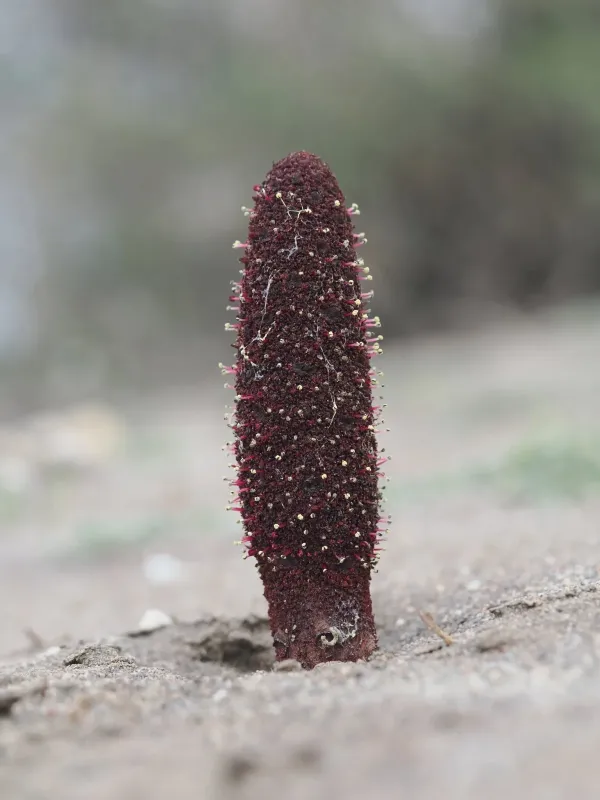
Regarding environmental requirements, the plant thrives in saline, sandy soils that are hostile to most flora. It requires a specific balance of heat and moisture to trigger the development of its characteristic fleshy, dark red inflorescences above the ground.
Botanical characteristics include a fleshy stem structure that can reach several centimeters in height. This structure serves the sole purpose of reproduction, as the vegetative portion of the plant remains entirely subterranean for its lifespan.
Cultivation of Cynomorium in an agricultural setting is currently non-existent due to its obligate parasitic nature. It does not respond to standard fertilizers or soil treatments, as its survival is exclusively dependent on the host plant's physiological status.
Main diseases and pests
The primary threat to Cynomorium coccineum is the ecological loss of its natural habitat. As a parasite, it cannot survive if the host population is destroyed or displaced by land development, agriculture, or urban expansion.
Traditional agricultural pests, such as aphids or soil-borne larvae, are not significant threats to this species. The extreme salinity of its environment serves as a natural barrier against many pathogens that typically plague conventional crops.
Over-harvesting by local populations seeking traditional medicinal remedies poses a significant danger. The removal of the entire flowering stem prevents the plant from dispersing seeds, which hinders the long-term regeneration of local colonies.
Overgrazing by livestock in arid coastal regions can mechanically destroy the emerging inflorescences. Since the plant has a slow reproductive cycle, such incidents can significantly impact the density of the local population over several seasons.
Ongoing research is focused on protecting the remaining natural habitats. There is no evidence of widespread disease outbreaks affecting the species, further underscoring that human-related habitat destruction remains its greatest risk factor.