
Cynomorium
Cynomorium L.
Description
Growing requirements
Cynomorium L. is a genus of perennial parasitic plants belonging to the family Cynomoriaceae. These plants are distinctive because they are holoparasites, meaning they lack chlorophyll and rely entirely on the root systems of host plants, such as those from the Chenopodiaceae or Tamaricaceae families, for nutrients.
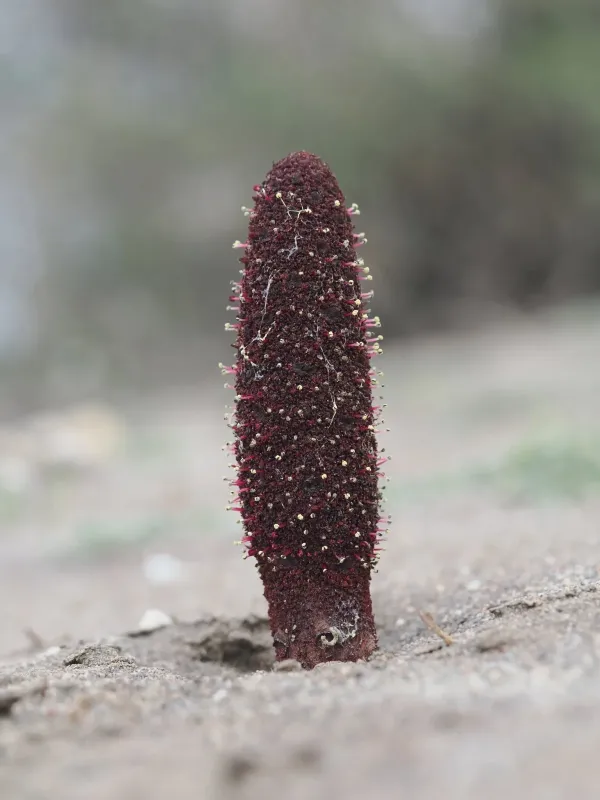
The morphology of the plant is characterized by a fleshy, club-shaped inflorescence that emerges from the soil, covered in small, scale-like leaves. Its appearance is often described as a dark red or brownish spike, which makes it easily recognizable in the barren landscape of its native habitat.
The habitat requirements for Cynomorium are specific to arid and semi-arid regions of Eurasia and North Africa. It thrives in saline soils where its host plants are established, forming complex underground attachments that facilitate the transfer of resources from the host to the parasite.
There is no standard agricultural practice for cultivating Cynomorium, as it requires the presence of an established host ecosystem. Its life cycle is deeply integrated with the survival of the host, making artificial plantation cultivation a significant biological and agricultural challenge.
Economically, Cynomorium is valued in herbal medicine. It is traditionally processed to extract bioactive compounds believed to support vitality and metabolic health, often referenced in historical texts as a significant desert plant used for tonic preparations.
Main diseases and pests
As a specialized parasite, Cynomorium is generally resistant to standard agricultural pests and diseases because of its specific chemical composition, which acts as a deterrent for many herbivorous insects.
The primary threat to the stability of the plant population is over-harvesting by humans. Since the plant is sought after for its medicinal properties, uncontrolled collection in the wild can lead to the severe depletion of local populations.
Disease outbreaks are not a primary concern for the species; however, the parasite is entirely dependent on the health of its host. If the host plant dies due to environmental stress or disease, the Cynomorium will inevitably perish as well.
Environmental degradation and the destruction of natural desert pastures pose a significant risk to the long-term survival of this botanical species in its natural distribution zones.
Conservation efforts are necessary to manage the harvesting of the plant sustainably, ensuring that the natural reproduction of the species is not compromised by industrial or commercial extraction practices.