
Chinese forget-me-not
Cynoglossum amabile Stapf & J. R. Drumm.
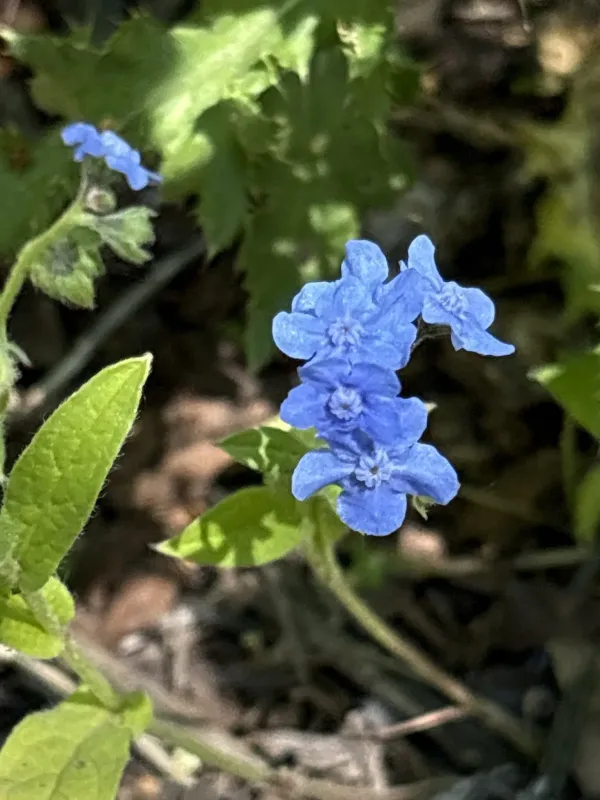
Description
Sowing dates
Chinese forget-me-not (Cynoglossum amabile), a member of the Boraginaceae family, is typically grown as an annual. For direct sowing, seeds should be planted in early spring once the soil has warmed up, ensuring a frost-free environment for the seedlings.
Starting seeds indoors 6 to 8 weeks before the last frost is a common practice for earlier blooms. Seeds require a well-draining seed-starting mix and should be covered lightly with soil, as they need a consistent environment to germinate effectively.
Thinning is an essential practice when sowing directly into the ground. Once seedlings reach a height of 5 centimeters, they should be thinned to a distance of 20–25 centimeters apart to allow for proper airflow and prevent competition for nutrients.
The optimal germination temperature for this species ranges between 15°C and 20°C. Maintaining these temperatures helps ensure rapid emergence and strong early development, which is critical for the plant's subsequent vigorous growth.
If sowing for a continuous blooming cycle, staggered planting can be implemented. By sowing small batches of seeds at two-week intervals, growers can ensure a prolonged period of color throughout the late spring and summer months.
Growing requirements
This plant thrives in locations with full sun exposure. While it can tolerate partial shade in hotter climates, maximum flower production is consistently observed in areas receiving at least 6–8 hours of direct sunlight daily.
Soil requirements for Cynoglossum amabile include high permeability and drainage. It performs best in sandy or loamy soils that do not retain excess water, as wet feet can lead to root decay and overall plant failure.
Maintaining a neutral pH level in the soil is ideal for nutrient absorption. If the native soil is too acidic, amending with lime can help stabilize the growth environment, while adding organic matter improves overall soil texture.
Watering should be balanced. While the plant possesses moderate drought tolerance, regular moisture during the establishment phase and peak flowering ensures a larger, healthier bloom surface and longer life cycle.
Fertilization should be handled with care. A balanced, slow-release fertilizer applied during the early growth stage is sufficient. Avoid high-nitrogen fertilizers that prioritize foliage over the vibrant blue flowers characteristic of the species.
Main diseases and pests
Fungal issues such as powdery mildew are the most common threats to the health of Chinese forget-me-not. These conditions are exacerbated by high humidity levels and poor spacing between individual plants.
Pests like aphids and spider mites can cause significant damage by feeding on the sap of young stems and leaves. Their presence can lead to yellowing, leaf distortion, and stunted growth if left unmanaged for an extended period.
Integrated Pest Management (IPM) is the recommended approach. This involves regular monitoring, the introduction of beneficial insects like ladybugs, and the use of targeted botanical soap sprays when localized outbreaks occur.
Sanitation practices play a vital role in preventing the spread of disease. Removing fallen leaves and spent blossoms helps eliminate potential fungal spores and reduces the habitat for various common garden pests.
Proper plant placement is a preventative measure. Ensuring adequate spacing between plants keeps the foliage dry and minimizes the risk of pathogens spreading, which is the most effective way to maintain a healthy and vibrant crop.