
Cymbopogon plurinodis
Cymbopogon plurinodis
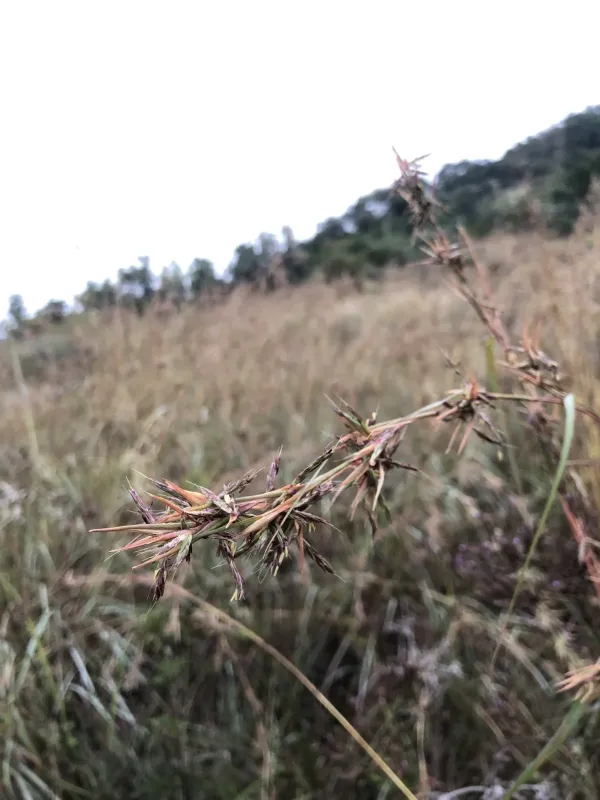
Description
Sowing dates
Cymbopogon plurinodis, a member of the Poaceae family, is a perennial grass species. The optimal sowing time is when environmental conditions reach a stable, warm state, with soil temperatures typically ranging between 15 and 18 degrees Celsius.
The seeds demonstrate good viability, but success depends on precise seedbed preparation. Sowing is usually performed in rows at a shallow depth of 1-2 centimeters, ensuring sufficient moisture contact while allowing for rapid seedling emergence.
Native to Southern Africa, this grass is adapted to seasonal rainfall patterns. In agricultural practice, planting is synchronized with the beginning of the rainy season to optimize natural irrigation for early development.
Planting density is a critical factor for long-term plantation productivity. Agronomists recommend maintaining a spacing of 30-50 centimeters between rows to minimize inter-plant competition for water and soil nutrients.
Selecting a location with excellent drainage is vital for successful establishment. Avoiding waterlogged areas during the early stages of growth is essential to prevent seed rot and root system damage.
Growing requirements
This crop has specific environmental requirements shaped by its evolution in arid savanna landscapes. It thrives in well-drained sandy or loamy soils with a neutral or slightly acidic pH level.
Cymbopogon plurinodis is highly resilient to high temperatures and extended drought periods. These traits make it an excellent candidate for agricultural diversification in arid and semi-arid climates where water availability is a limiting factor.
The species is heliophilic, requiring open and well-lit areas to maximize the biosynthesis of essential oils within its vegetative tissues. Shaded environments can lead to reduced essential oil concentration and stunted growth.
Nutrient requirements are moderate, though targeted nitrogen fertilization at the beginning of the growing season can significantly boost biomass production. Excess fertilization should be avoided as it may attract pests or increase disease susceptibility.
The plant forms a strong, dense root mass that contributes to soil stabilization. This feature makes it useful for erosion control on vulnerable slopes or degraded lands within a farm management plan.
Yield
Yield potential of Cymbopogon plurinodis depends heavily on management intensity and soil fertility. Under optimal conditions, the crop can support multiple harvests per growing season, increasing overall economic returns.
The primary yield component is the aerial biomass, which acts as the storage organ for volatile aromatic compounds. Harvesting at the peak of the flowering phase is essential for maximizing the quantity and quality of the extracted oil.
Plantation productivity is linked to the age of the crop stand. Stands are generally most productive between the ages of 2 and 5 years, after which a gradual decline in growth rates is often observed.
Regular pruning of older stems is an effective agronomic practice to stimulate the regrowth of fresh, high-oil-content shoots. This periodic harvesting helps maintain the plantation in a state of active, sustained production.
Industrial processing efficiency is a major factor in determining final output. Proper post-harvest handling and modern distillation techniques are crucial to ensuring that the harvested biomass is converted effectively into marketable essential oil.
Main diseases and pests
While robust, Cymbopogon plurinodis can face significant pressure from pathogens under poor management practices. Fungal infections are the most common issue, typically triggered by high humidity levels and lack of ventilation within the crop canopy.
Certain insect species that target grass stems and root systems pose a primary threat to crop health. In its native range, locusts and specific stem-boring beetles can cause localized damage that reduces overall quality.
Disease prevention centers on maintaining appropriate planting density to promote air circulation. Avoiding irrigation stagnation is key, as constant wetness creates an environment conducive to fungal proliferation.
Integrated pest management strategies are recommended to minimize chemical reliance. Utilizing biological controls helps maintain the organic integrity of the crop, which is highly valued in the essential oil market.
- Root rot caused by prolonged waterlogging.
- Cereal rust diseases in high-humidity conditions.
- Damage from stem-boring insects.
- Aphid infestations on young, tender shoots.
Harvesting
Harvest timing is critical for ensuring the highest quality essential oil profile. Harvesting is best conducted during dry, sunny mornings, once the dew has evaporated but before the intense midday heat.
Plants are cut at a height of 5-10 centimeters above the soil surface. This height ensures the remaining crown remains intact, allowing for rapid vegetative recovery and subsequent harvests within the season.
Immediately after cutting, the biomass must be protected from direct sunlight to prevent the evaporation of volatile aromatic compounds. Quick transport from the field to the processing facility is paramount.
Steam distillation remains the preferred industrial method for extracting essential oils from this species. Maintaining consistent temperature and pressure settings throughout the process is vital for batch-to-batch product uniformity.
If processing is delayed, the biomass should be dried in a cool, well-ventilated area away from UV exposure. Proper storage of the final product in airtight containers prevents oxidation and maintains the desired aromatic properties.