
Cymbidiella pardalina
Cymbidiella pardalina
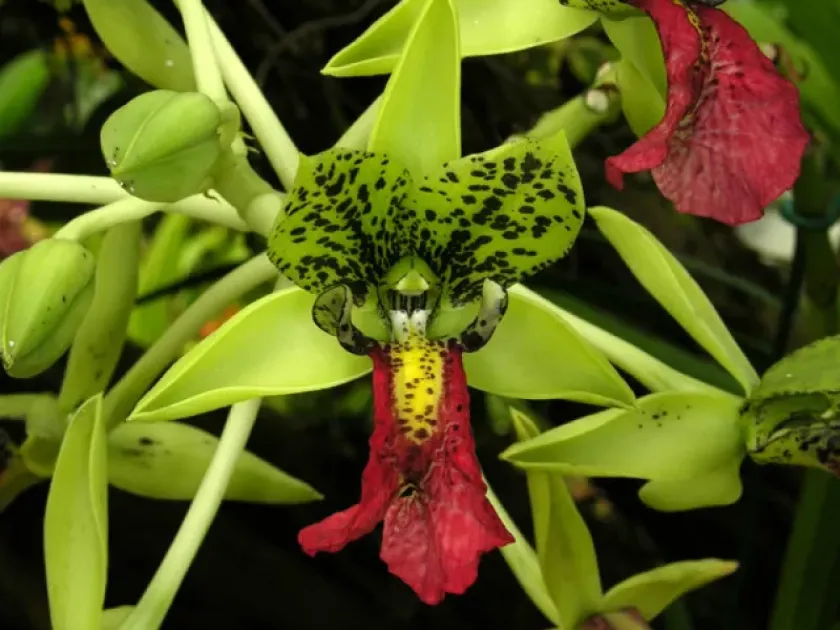
Description
Growing requirements
Cymbidiella pardalina is a stunning epiphytic orchid species belonging to the Orchidaceae family. Native to the island of Madagascar, this plant is known for its unique relationship with other plants, often growing in association with Platycerium ferns high in the forest canopy.
The climate requirements for this species are strictly tropical. It thrives in conditions where temperatures remain between 22 and 29 degrees Celsius throughout the year. It does not tolerate prolonged cold snaps, which can lead to rapid deterioration of the plant's metabolic functions.
High relative humidity is essential for the healthy development of Cymbidiella pardalina. Humidity levels should ideally stay around 75 to 80 percent. In a domestic environment, this usually necessitates the use of a specialized greenhouse or a highly controlled terrarium setup with active humidification.
The choice of substrate is critical for the long-term success of the plant. A mixture consisting of large pine bark chips, charcoal, and perlite provides the necessary drainage and aeration. Because it is an epiphyte, the roots must be exposed to air and should not be buried in fine, dense potting soil.
Regarding light, Cymbidiella pardalina requires bright, filtered light to stimulate blooming. While it needs plenty of energy to support its large pseudobulbs, direct sunlight should be avoided during the peak hours of the day to prevent leaf scorch and dehydration of the plant tissues.
Main diseases and pests
The primary threat to the health of Cymbidiella pardalina is root rot, frequently caused by improper watering techniques or drainage issues. When the roots remain saturated for too long, oxygen supply is cut off, allowing fungal pathogens to proliferate and destroy the root system.
Common pests include spider mites, which thrive in environments where air circulation is poor or humidity is insufficient. These mites damage the leaf epidermis, creating tiny entry points for pathogens and reducing the overall photosynthetic capacity of the plant.
Scale insects represent another significant threat. These pests often attach themselves to the pseudobulbs and leaf bases, making them difficult to detect early. Their feeding habits cause stunted growth and can lead to the overall decline of the orchid if left untreated.
Bacterial soft rot can occur if water remains trapped in the central crown of the plant for extended periods. This condition progresses rapidly, turning tissues into a mushy, foul-smelling mass. Immediate isolation and trimming of infected parts, followed by fungicide application, are necessary to save the specimen.
Finally, improper fertilizer concentration is a frequent cause of chemical stress. Since these plants are evolved to thrive in nutrient-poor environments, they are highly sensitive to over-fertilization. Excess salts accumulating in the substrate can burn the delicate root tips, stalling growth indefinitely.