
Cycnoches pentadactylon
Cycnoches pentadactylon
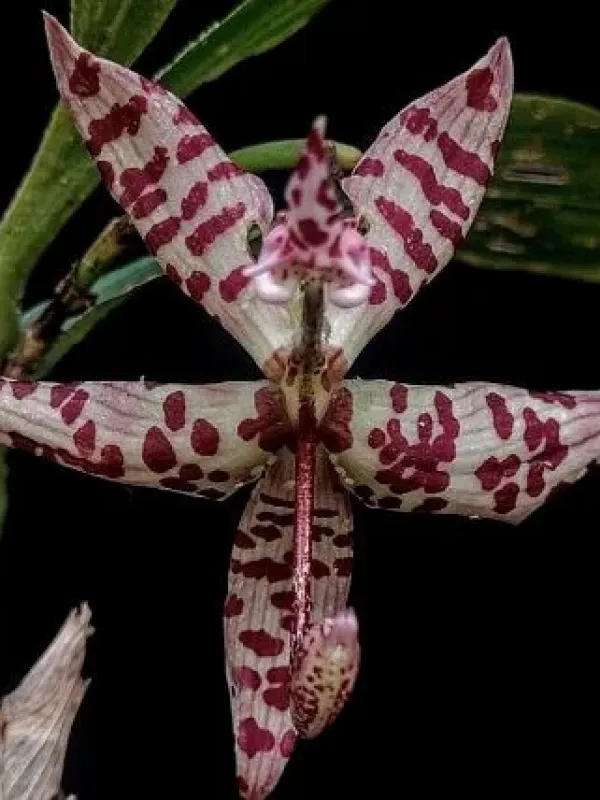
Description
Growing requirements
Cycnoches pentadactylon is a fascinating member of the Orchidaceae family, native to the tropical regions of South America, including Brazil and Peru. It is categorized as an epiphytic plant that thrives in high-canopy forest environments.
Botanically, this species is noted for its elongated, spindle-shaped pseudobulbs that store water and nutrients. Its deciduous nature means the plant naturally sheds its leaves after completing its annual growth cycle.
Optimal growth requires bright, filtered light and consistent temperature control. Day temperatures should range between 22°C and 28°C, while a slight night drop to 16°C-18°C is essential to trigger healthy metabolic processes.
The substrate must be exceptionally well-draining, consisting primarily of large bark chips, charcoal, and perlite. Proper air circulation around the roots is vital to prevent the onset of rot, which this genus is particularly prone to.
Watering should be frequent during the active growing season, coinciding with the expansion of new shoots. Once leaf drop occurs, irrigation must be significantly reduced to provide a necessary resting period for the pseudobulbs.
Main diseases and pests
Common pests affecting Cycnoches pentadactylon include spider mites and scale insects, which often thrive in indoor environments with low humidity levels.
Fungal issues, particularly root rot and stem rot, are frequent complications caused by poor drainage, overly dense growing media, or excessive water retention during the cooler months.
Integrated pest management strategies are crucial, involving both biological monitoring and the judicious use of systemic pesticides when infestations are detected.
Bacterial soft rot can occur if water remains trapped in the center of new growths for too long, necessitating careful watering techniques that avoid wetting the foliage.
- Inspect plants weekly for early signs of discoloration.
- Maintain proper spacing between plants to enhance airflow.
- Isolate newly acquired specimens before adding them to your collection.