
Curatella americana
Curatella americana
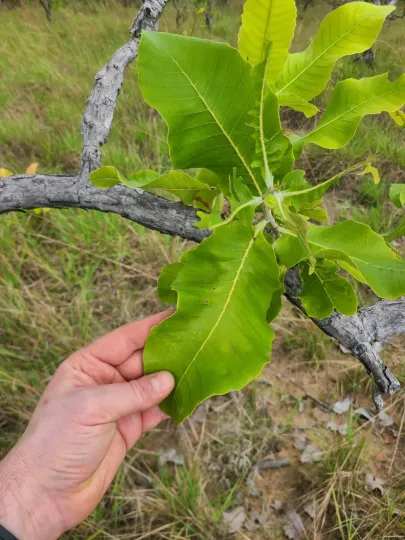
Description
Growing requirements
Curatella americana is a distinct member of the Dilleniaceae family, native to the tropical regions of Central and South America. Known commonly as the "sandpaper tree" due to its rough, abrasive leaves, it thrives in savannas and the Brazilian cerrado biome.
The plant is highly adapted to tropical climates characterized by distinct wet and dry seasons. Its physiological structure allows it to survive in nutrient-poor, well-drained soils, often where other species might struggle due to drought or high fire frequency.
Botanically, this species typically reaches the height of a small tree or shrub. Its most notable feature is the leaves, which contain significant amounts of silica, giving them a texture similar to fine-grit sandpaper, which has historically been utilized for wood finishing.
In terms of habitat requirements, Curatella americana demands full sunlight to maintain its growth cycles. It is a resilient species that exhibits fire-resistant traits, allowing it to recover quickly after the savanna wildfires that occur in its natural habitat.
Beyond its use as an abrasive tool, the tree holds ecological value as a nectar source and a structural component of savanna vegetation. The bark is also utilized for its tanning properties, which are valuable in local traditional processing of animal hides.
Main diseases and pests
Curatella americana is remarkably resistant to typical agricultural pests, owing to its high content of secondary metabolites and tough, silicified foliage. This natural defense mechanism protects it from most herbivorous insects and general plant stressors.
Fungal infections are infrequent and usually confined to instances of extreme stress or localized environmental imbalances. Given its evolutionary history in harsh savanna environments, the plant maintains a high level of vigor throughout its lifespan.