
Cucumeropsis mannii
Cucumeropsis mannii
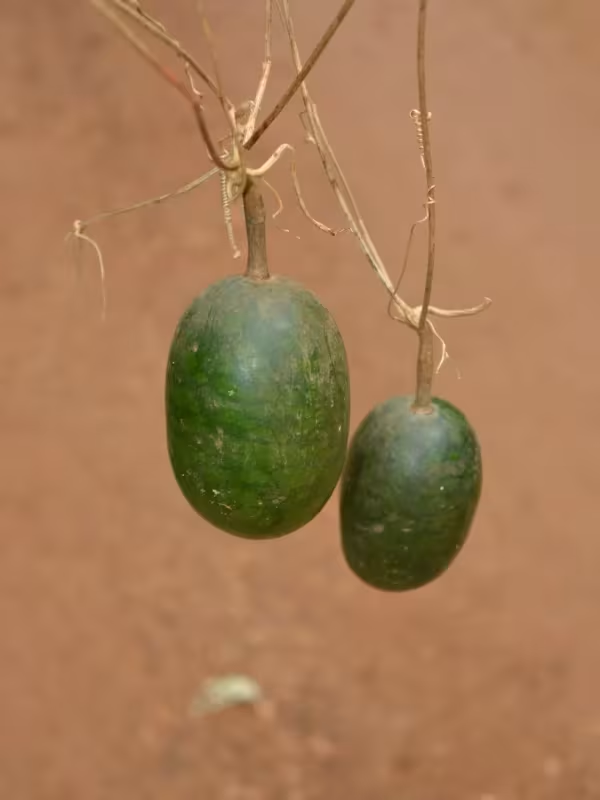
Description
Sowing dates
Cucumeropsis mannii is a tropical crop that requires specific timing for planting, usually coinciding with the onset of the rainy season. In its native West African regions, planting is best performed between April and May.
Seeds are sown directly into prepared garden beds at a depth of 3 to 5 centimeters. This depth ensures that the seeds are protected from drying out while receiving sufficient moisture from the soil to trigger rapid germination.
The planting strategy involves placing 2-3 seeds per hill to ensure stand establishment. After the seedlings emerge, they are thinned to keep only the most robust individual, which promotes healthier and more uniform growth.
Given the vigorous vining nature of this species, spacing is crucial. Proper ventilation is required between the plants to minimize the risk of foliar diseases, which are common in the humid tropics.
Soil preparation before sowing should include the incorporation of compost or well-rotted organic matter, which significantly improves moisture retention and soil fertility during the critical early stages of development.
Growing requirements
As a member of the Cucurbitaceae family, Cucumeropsis mannii thrives in fertile, well-drained loamy soils. It is highly intolerant of waterlogged conditions, which can quickly lead to root rot and plant failure.
The crop is highly temperature-dependent, requiring warm conditions throughout its growing cycle. An optimal temperature range of 24 to 32 degrees Celsius is necessary to support vigorous vine growth and optimal flowering.
Full sun exposure is mandatory for this crop. Any shade, particularly during the peak growing phase, will lead to etiolated stems and a significant decrease in seed production and fruit filling.
Regular irrigation is beneficial during the flowering and fruit-setting stages, especially if rains are inconsistent. However, moisture management must be balanced to prevent excessive soil saturation.
Cucumeropsis mannii benefits from balanced nutrient input. Potassium and phosphorus are essential for seed development, while adequate nitrogen levels early on support the vegetative expansion necessary to sustain heavy fruit loads.
Yield
The primary economic output of Cucumeropsis mannii is its nutrient-dense seeds, often referred to as egusi. Yields can reach 600 to 900 kilograms per hectare under optimal management practices and fertile soil conditions.
The fruits themselves are generally not consumed for their pulp, which is often fibrous and bitter, but they serve as essential containers for the valuable seeds. These seeds contain a high percentage of protein and essential oils.
Industrial applications of the seeds include oil extraction for culinary and cosmetic uses. The press cake left after oil extraction is frequently used as a protein-rich supplement in animal feeds.
Maximizing yield requires active management of plant health to ensure that the vines remain active long enough to fill the seed cavities completely. Premature cessation of growth due to stress drastically reduces the seed size.
Harvested seeds must be dried properly to maintain their market value. High-quality seeds have a long shelf life, making them a strategic food security crop in many African agricultural systems.
Main diseases and pests
Common pests include aphids, whiteflies, and spider mites, which can cause significant stress by feeding on leaf sap. Integrated Pest Management (IPM) techniques, including the use of neem oil or biological controls, are effective.
Fungal diseases like powdery mildew are prevalent in high humidity. These diseases appear as white spots on the leaves and can spread rapidly, so spacing and pruning are key cultural controls for managing infection.
Viral infections, typically transmitted by insects, represent a major threat to yield stability. Removing infected plants immediately and controlling insect populations are essential steps in protecting a healthy crop.
Weed management is vital during the first four to six weeks of growth. Without proper weeding, young seedlings are easily outcompeted, leading to stunted plants that never recover their full potential.
Root-knot nematodes can also be a problem in frequently cropped soils. Rotating Cucumeropsis mannii with non-host crops is a recommended practice to keep soil-borne pathogens at manageable levels.
Harvesting
Harvesting occurs when the fruit rind hardens and turns a pale yellow or brown color. At this stage, the fruit is fully mature, and the nutrient translocation to the seeds has reached its maximum.
Fruits are harvested by cutting the peduncle with a sharp knife. It is important to handle the fruits gently to avoid cracking the rind, which could lead to contamination and premature rotting of the seeds inside.
Once harvested, the fruits are typically stored for a few days to complete the ripening process. After this period, they are split open to manually extract the seeds, which are then cleaned of any remaining pulp.
Drying is the final and most critical step. The seeds are spread out in thin layers in direct sunlight, where they are turned regularly to ensure uniform moisture reduction to below 10 percent.
Properly dried seeds are stored in breathable woven bags in cool, dry places. This ensures that the oil content remains stable and the seeds do not turn rancid over long periods of storage.