
Cryptostegia grandiflora
Cryptostegia grandiflora Roxb. ex R. Br.
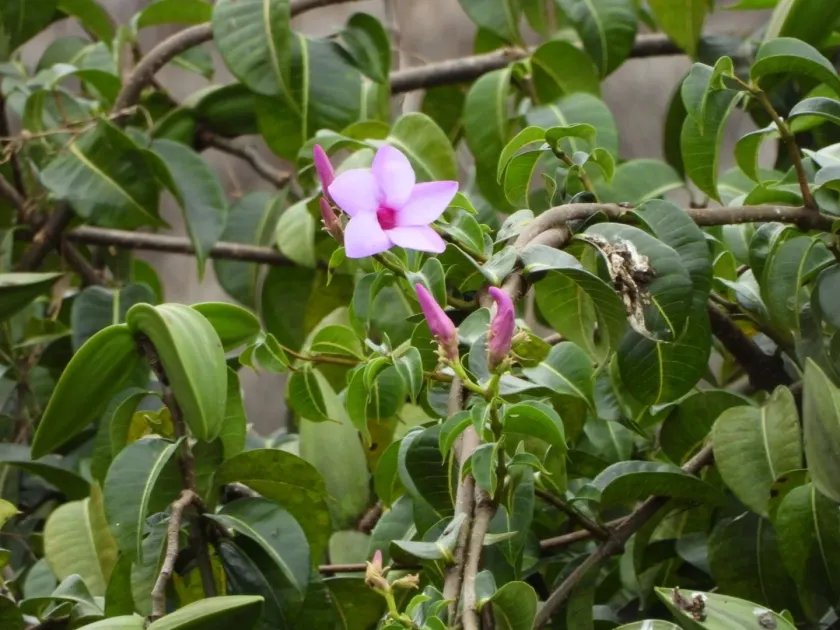
Description
Sowing dates
Propagation of Cryptostegia grandiflora is primarily achieved through seeds, which demonstrate high germination rates under optimal warmth and moisture. Sowing is best performed at the onset of the rainy season to allow seedlings to establish robust root systems before the peak of summer.
Vegetative propagation using stem cuttings is a common practice for maintaining uniform plantations. Cuttings should be taken from semi-hardwood stems to ensure rapid root development in a controlled, humid nursery environment.
When planting, it is crucial to maintain appropriate spacing. While the plants are hardy, overcrowding can inhibit the development of the main stems, which are the primary sites for latex storage and accumulation.
Seedlings require significant attention during the first few weeks. Weed control is essential during this stage, as the young vines are highly susceptible to competition for light and nutrients in their early growth phases.
Providing adequate support structures such as trellises or stakes can improve airflow and sun exposure, which directly influences the overall health and productivity of the crop in its first year.
Growing requirements
Cryptostegia grandiflora is a woody, perennial climber belonging to the Apocynaceae family. Originally from Madagascar, this species is now widely distributed in tropical and subtropical regions where it has become naturalized due to its aggressive growth habits.
The plant thrives in full sunlight, which is necessary for the metabolic processes that produce latex. Exposure to direct light is one of the most critical factors for maximizing the economic yield of the plantation.
Regarding soil requirements, the plant is remarkably adaptable. It performs well in various soil types, ranging from sandy loam to rocky substrates, provided that the site offers excellent drainage to prevent root rot.
Temperature is a limiting factor for distribution. The plant requires a frost-free climate, with an optimal growth temperature range between 25 and 32 degrees Celsius. Temperatures dropping near freezing can severely damage the foliage and stems.
While the plant is known for its drought tolerance once established, consistent moisture during the active growing season will significantly boost biomass production. Proper irrigation management is key to maintaining a cycle of continuous harvest.
Yield
The principal commodity produced by this plant is natural rubber (latex). The latex is harvested through a process of careful incision on the stems, allowing the viscous fluid to be collected in small vessels or coagulated directly on the vine.
Beyond rubber production, the stems provide high-quality fibers that can be processed for textiles or twine. This secondary product adds significant value to the overall farming operation, ensuring the entire plant is utilized.
Yield efficiency is determined by the age of the vines and the frequency of the tapping cycles. Mature plants managed with appropriate fertilization and regular pruning often exhibit sustained latex production over several years.
The species also serves environmental purposes, such as erosion control in arid landscapes, where its deep root system stabilizes the topsoil. This makes it a multi-purpose plant for degraded agricultural lands.
Future potential lies in the pharmaceutical and chemical sectors, as researchers continue to study the specific compounds present in the plant’s sap for potential applications in bio-based material manufacturing.
Main diseases and pests
The plant is notorious for its invasive potential. Outside of managed plantations, it can quickly overwhelm local ecosystems, making effective containment strategies a mandatory component of its agricultural management plan.
Several insect pests, particularly lepidopteran larvae, are capable of consuming the plant's foliage. While the sap contains cardiac glycosides that are toxic to most animals, certain specialized insects have adapted to feed on it, requiring vigilant pest monitoring.
Fungal diseases related to moisture excess, such as root rot and leaf spot, represent the most common biological threat. Preventive measures include strictly controlled irrigation and maintaining adequate ventilation within the plantation.
The toxicity of the plant poses a significant risk to livestock. It is strictly recommended to avoid planting this crop in areas where cattle or sheep have free access, as ingestion can lead to fatal cardiac issues.
Integrated Pest Management (IPM) is the best approach to control these threats, combining biological controls with mechanical pruning to ensure the health of the plants while minimizing the use of synthetic chemicals.
Harvesting
Latex harvesting involves systematic tapping of the stems, ideally during the early morning when the pressure within the plant's vascular system is highest. This maximizes the flow of the sap before the heat of the day.
Collected latex must be handled quickly to prevent premature coagulation in the collection containers. Standard procedures include filtering the sap to remove impurities before further processing into raw rubber sheets.
For fiber extraction, mature stems are harvested at the end of the growth cycle. The outer bark is processed through retting and mechanical cleaning to isolate the bast fibers, which are strong and flexible.
Pruning the vines after the harvest serves two purposes: it facilitates the collection of fibers and stimulates the growth of new, productive stems for the following season.
Proper record-keeping of the yield from each sector of the plantation helps agronomists optimize tapping schedules and adjust nutrient inputs to ensure the long-term sustainability of the harvest operations.