
Crepidorhopalon rupestris
Crepidorhopalon rupestris
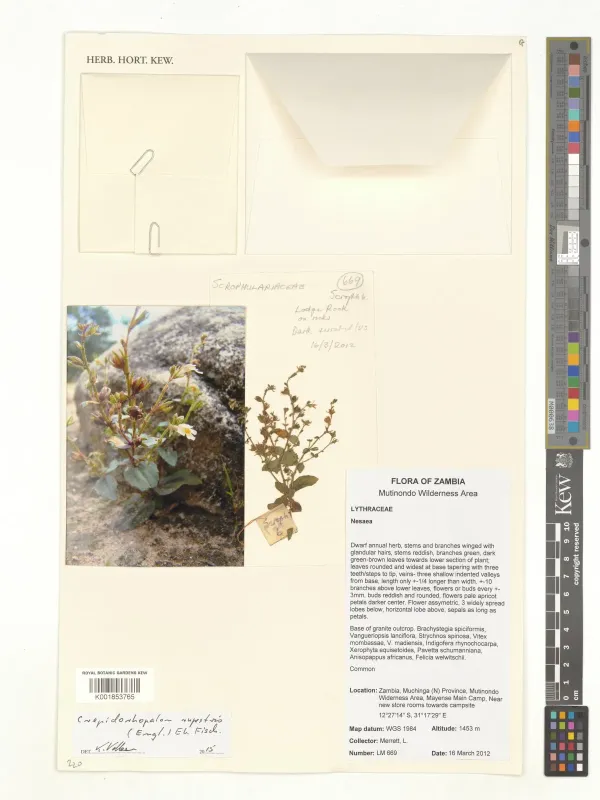
Description
Sowing dates
Sowing seeds of Crepidorhopalon rupestris requires a controlled environment where temperature stability is prioritized to ensure a uniform germination rate across the batch.
The selection of a sterile and highly porous substrate is essential for the early stages of growth, preventing the seeds from being smothered by dense organic matter.
Due to the small size of the seeds, they should be surface-sown with minimal soil cover, as light is a critical factor for the triggering of successful seedling emergence.
Providing adequate spacing during the propagation phase ensures that each seedling has access to sufficient air circulation, which is vital for preventing damping-off diseases.
Transplanting to the permanent location should be timed to coincide with the end of the frost season, ensuring the root system can establish in warming soil conditions.
Growing requirements
As a member of the Linderniaceae family, Crepidorhopalon rupestris originates from specialized rocky habitats, which dictates its preference for mineral-rich, poor soils.
Drainage is the most important soil characteristic for this crop, as the species is highly intolerant of waterlogged conditions that cause root suffocation.
Full sun exposure is required for healthy plant development, promoting compact growth and strengthening the stems against environmental stressors.
While the plant is adapted to rocky environments, supplemental irrigation during extreme dry spells can improve biomass production without compromising plant health.
Soil pH should be monitored periodically, as maintaining slightly acidic to neutral levels will ensure the bioavailability of necessary micronutrients for the plant.
Main diseases and pests
The primary threats to this culture are moisture-related pathogens, particularly soil-borne fungi that thrive when the growing medium remains persistently wet.
Insects like spider mites can become an issue during periods of high heat, necessitating regular monitoring of the foliage underside to catch early infestation signs.
Preventative cultural practices, such as maintaining adequate space between plants and avoiding overhead irrigation, are the best defense against disease outbreaks.
Foliar damage can also be caused by excessive salt buildup in the soil, often resulting from poor-quality irrigation water used over an extended vegetative cycle.
In case of severe infestation or disease, immediate mechanical removal of affected plants is advised to preserve the integrity of the remaining crop stand.