
Coula edulis
Coula edulis
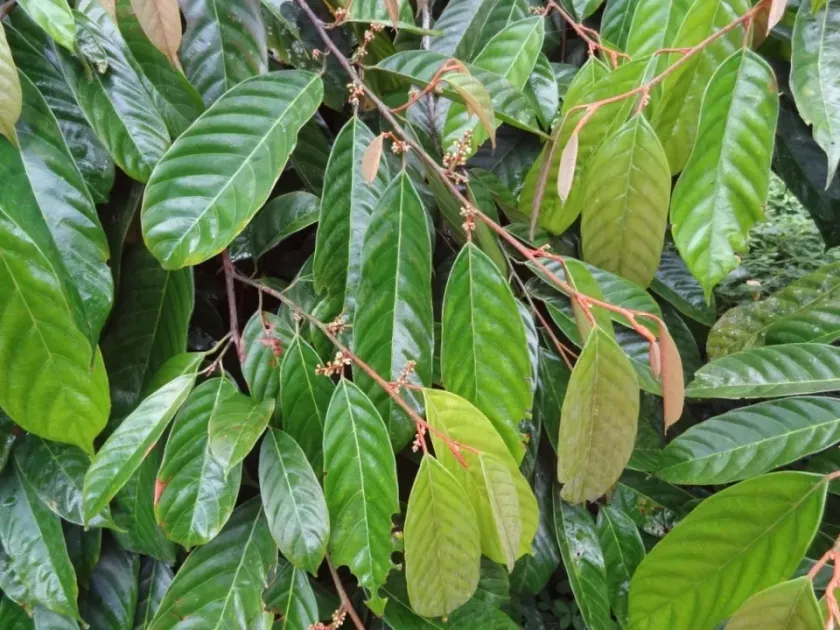
Description
Sowing dates
Propagation of Coula edulis is primarily achieved through seeds, which should be planted immediately after harvest due to their short viability period.
Nursery beds must be prepared with well-draining, nutrient-rich organic soil to ensure the successful germination of the seeds in tropical environments.
Seedlings require partial shading in the early stages of their growth cycle to protect them from direct sunlight, which can inhibit their development.
Transplanting the young trees into the field is ideally performed at the onset of the rainy season to guarantee adequate water for root establishment.
Given the long-term nature of the crop, spacing is critical, and trees should be planted at least 8 to 10 meters apart to allow for mature growth.
Growing requirements
Coula edulis, a member of the Olacaceae family, is a slow-growing evergreen tree that typically thrives in the moist tropical forests of West Africa.
The tree demands a warm, humid climate with high annual rainfall, making it unsuitable for dry or temperate regions without intensive irrigation systems.
Deep, fertile, and well-drained soils are essential for the health of Coula edulis, as the species is sensitive to waterlogging around its root zone.
The tree prefers a forest-like structure where it can receive protection from direct exposure to wind and extreme sun during its juvenile phase.
Maintaining soil organic matter and beneficial micro-organisms is vital for supporting the nutritional uptake of this tree species in plantation settings.
Yield
The nuts of Coula edulis, often called African walnuts, are highly valued for their high fat and protein content, serving as a staple food source.
The tree takes approximately 10 to 15 years to reach significant commercial productivity, necessitating long-term planning for agroforestry ventures.
Mature trees can produce between 50 and 150 kilograms of nuts annually, depending on their health, density, and local environmental conditions.
The economic potential of the crop lies in the kernels, which are prized for their flavor and nutritional profile, comparable to other high-value nuts.
Stable harvest yields are highly dependent on rainfall distribution, and supplemental irrigation can significantly enhance output during dry spells.
Main diseases and pests
Common threats to the crop include various wood-boring insects and foliage-feeding larvae that can weaken the overall health of the tree.
Fungal pathogens pose a major risk in plantation areas with poor drainage, often resulting in root rot and structural instability of the trees.
Wild animals, especially monkeys and rodents, are major pests that often consume the nuts before they can be harvested by human labor.
Integrated pest management strategies focusing on sanitation and physical protection are essential to reduce losses in yield and ensure long-term sustainability.
Regular monitoring of canopy health is recommended to detect any signs of infestation before it spreads throughout the plantation.
Harvesting
Harvesting primarily involves collecting mature nuts that have naturally fallen to the ground, which signifies peak nutritional maturity.
The fleshy outer pulp of the fruit must be removed shortly after collection to prevent spoilage and ensure the quality of the internal kernel.
Proper post-harvest drying is required, where the nuts are spread in shaded, airy areas to reduce moisture content for longer storage life.
The kernels are susceptible to rancidity if not stored in cool, dry conditions away from direct light and moisture-rich environments.
Quality control during sorting ensures that only sound, undamaged nuts reach the market, maximizing the value of the harvested crop.