
American smoketree
Cotinus obovatus
Description
Growing requirements
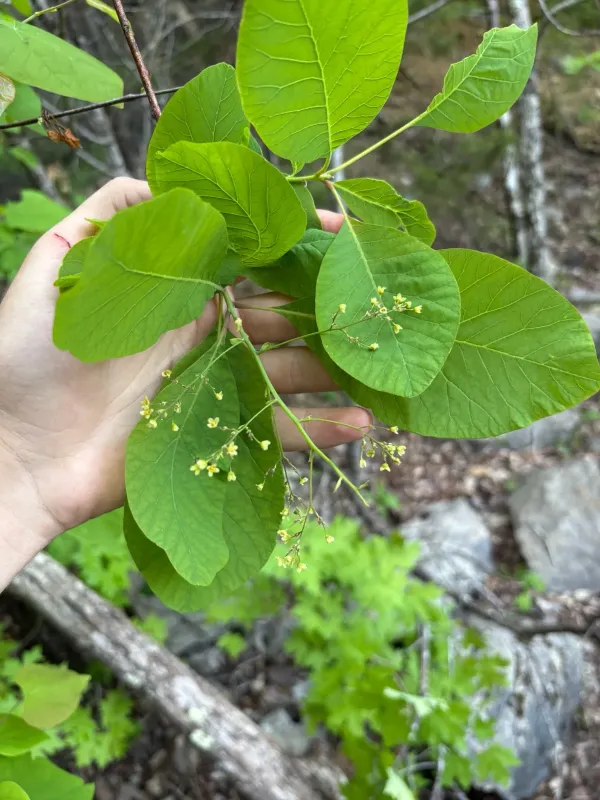
The American smoketree (Latin: Cotinus obovatus) is a deciduous shrub or small tree belonging to the Anacardiaceae family. Native to the southeastern United States, it is widely recognized for its vibrant foliage and unique aesthetic appeal in landscaping.
This species is highly adaptable and thrives in full sun conditions, which are essential for its vigorous growth and the development of its signature fiery orange and red fall colors. It is well-suited to diverse climates, displaying significant hardiness once established.
When it comes to soil, the American smoketree prefers well-draining, moderately fertile ground. It is particularly tolerant of rocky or alkaline soils, making it an excellent choice for sites where other, more demanding woody plants might fail.
Standard agronomic practices include basic maintenance such as occasional pruning to encourage structural strength or to control the size of the plant. Young specimens require consistent watering until their root systems are fully developed.
The primary use of the American smoketree is in ornamental horticulture. It is frequently planted as a focal point in landscape designs due to its dramatic seasonal changes and robust performance in urban and rural environments.
Main diseases and pests
The American smoketree is generally considered a low-maintenance plant with few severe health issues. However, overwatering or heavy, waterlogged soils can lead to root rot, so ensuring proper drainage at the time of planting is critical.
Pests such as aphids or scale insects may occasionally infest the foliage, particularly on young growth. Regular monitoring and the application of appropriate horticultural oils or systemic insecticides can easily manage these populations.
Verticillium wilt is a potential threat that can affect the vascular system of the tree. Symptoms include sudden wilting and dieback of branches, which necessitates the immediate removal and destruction of affected wood to prevent spread.
Leaf spot diseases and powdery mildew can occur, especially in seasons with high humidity or poor air circulation. Proper spacing between individual plants and pruning to open the canopy significantly reduces the likelihood of infection.
Maintaining plant vigor through balanced fertilization (if necessary) and timely sanitation helps the tree remain resilient against common environmental stresses and opportunistic pathogens.