
Cornucopiae alopecuroides
Cornucopiae alopecuroides
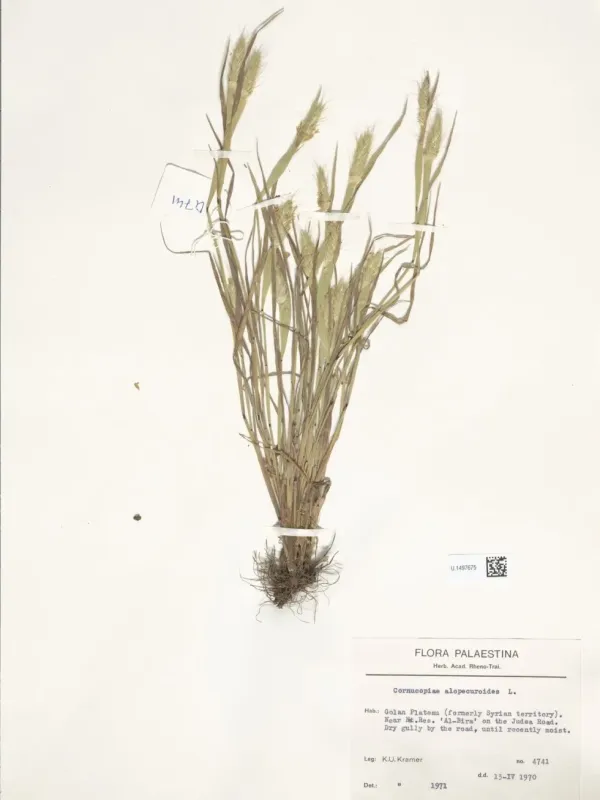
Description
Sowing dates
Cornucopiae alopecuroides is a species of grass in the family Poaceae. This annual plant is characterized by its specific morphological development, making it an interesting subject for specialized forage and pasture studies.
Sowing should be performed when soil temperatures stabilize at approximately 8–10 degrees Celsius. In favorable climatic conditions, early spring sowing is preferred to ensure that plants establish before the heat of summer.
The recommended seeding method involves a row spacing of 15 cm. This configuration optimizes space for root development and ensures that the grass stand density remains within an efficient productive range.
Due to the small size of the seeds, the sowing depth must be strictly limited to 1–2 cm. Excessive depth can lead to seed exhaustion before emergence, significantly reducing the success rate of the crop.
Post-seeding management requires soil compaction to ensure sufficient moisture contact. Proper seed-to-soil contact is the most critical factor for uniform germination and early plant development in this species.
Growing requirements
The crop requires well-drained, fertile soils with a neutral or slightly acidic reaction. It does not tolerate waterlogging, so selecting fields with high landscape positions is crucial for preventing root rot and stunted growth.
Cornucopiae alopecuroides thrives in full sunlight. High light intensity is required for optimal photosynthesis and the development of vigorous stalks, which directly influences the overall yield of the forage.
Climatic requirements focus on moderate temperatures. While the species can handle spring weather fluctuations, it performs best under temperate conditions where moisture is available throughout the growing season.
Nutrient management is essential for maximizing yield. Applying a balanced NPK fertilizer during the early tillering phase helps stimulate vegetative growth and prepares the plant for biomass production.
Weed control is vital during the early establishment phase. As the crop exhibits slow initial growth, mechanical weeding or appropriate chemical interventions are needed to prevent competitive exclusion by weeds.
Main diseases and pests
Fungal diseases, including rusts and powdery mildew, represent the primary biological threat. These conditions usually arise during periods of high humidity combined with poor airflow within the crop canopy.
Common insect pests include various cereal flies and wireworms. Wireworms, in particular, cause physical damage to the root system, which can result in patchy stands and significant loss of biomass yield.
The implementation of a robust crop rotation plan is the most effective way to manage disease pressure. Rotating with legumes or broad-leaved crops helps decrease the concentration of cereal-specific pathogens.
Integrated pest management (IPM) practices should be employed to control pest populations. Regular monitoring allows for targeted applications, minimizing the necessity for broad-spectrum pesticides.
Plant vigor, maintained through proper irrigation and fertilization, serves as the first line of defense against most agricultural pests, allowing the crop to recover faster from minor infestations.