
Cordylanthus capitatus
Cordylanthus capitatus
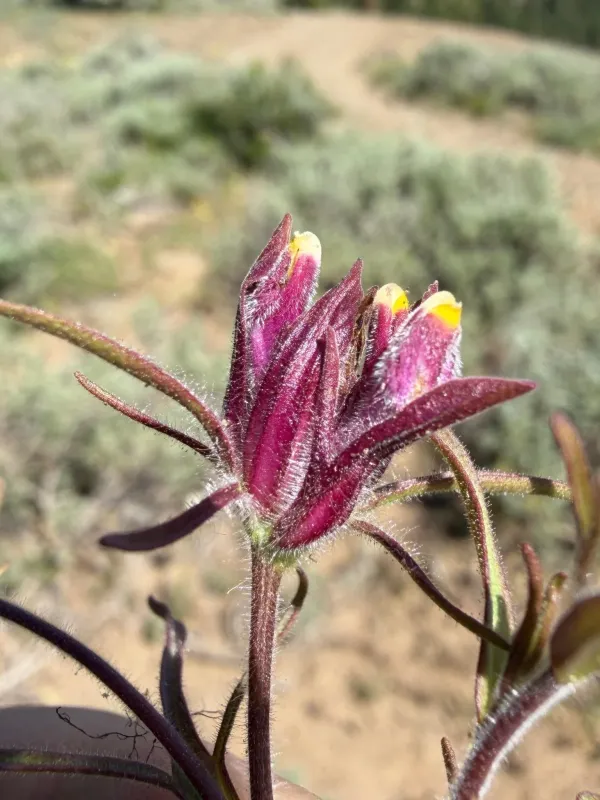
Description
Growing requirements
Cordylanthus capitatus is an annual plant belonging to the Orobanchaceae family. Unlike conventional crops, this species is a hemiparasite, meaning it performs photosynthesis but relies on the root systems of host plants to acquire essential water and mineral nutrients via specialized structures called haustoria.
The native distribution of this plant is concentrated in the western regions of North America, including parts of Oregon, California, and Nevada. It typically thrives in open, sunny locations with well-drained soils, often inhabiting high-elevation meadows or mountain slopes.
Botanically, the plant features an erect stem covered in glandular hairs, which gives it a distinct sticky texture. The leaves are narrow and slender, adapted to withstand high solar radiation, while its most prominent feature is the compact, head-like inflorescence.
Optimal growth conditions require poor to moderately fertile soils that provide excellent drainage. Waterlogged soil conditions are detrimental to the plant's health, as they impede its ability to maintain effective parasitic attachments to its host plants.
The culture is not commonly grown for industrial purposes; however, in research settings, it requires the presence of specific companion plants. Without a host, the development of the root system and the subsequent flowering process are significantly hindered.
Main diseases and pests
The primary threat to Cordylanthus capitatus populations is the loss and fragmentation of natural habitats due to livestock grazing and urban development. These activities often eliminate the host plants necessary for its survival.
Root rot and fungal infections are common when the plant is grown in environments with excessive soil moisture. These pathogens target the sensitive connection points between the parasite and its host, leading to premature plant decline.
Pests such as aphids may occasionally infest the plant's succulent parts. However, the plant's chemical defenses, including various iridoid glycosides, serve as a deterrent against most generalist herbivores.
Invasive plant species represent a major ecological challenge. These plants often outcompete Cordylanthus capitatus for limited resources like light and space, effectively displacing the populations from their native range.
Agricultural management for this species is minimal and focuses mostly on habitat preservation rather than active cultivation, as it remains a delicate component of wild mountain ecosystems.