
Cordyceps militaris
Cordyceps militaris (L.) Fr.
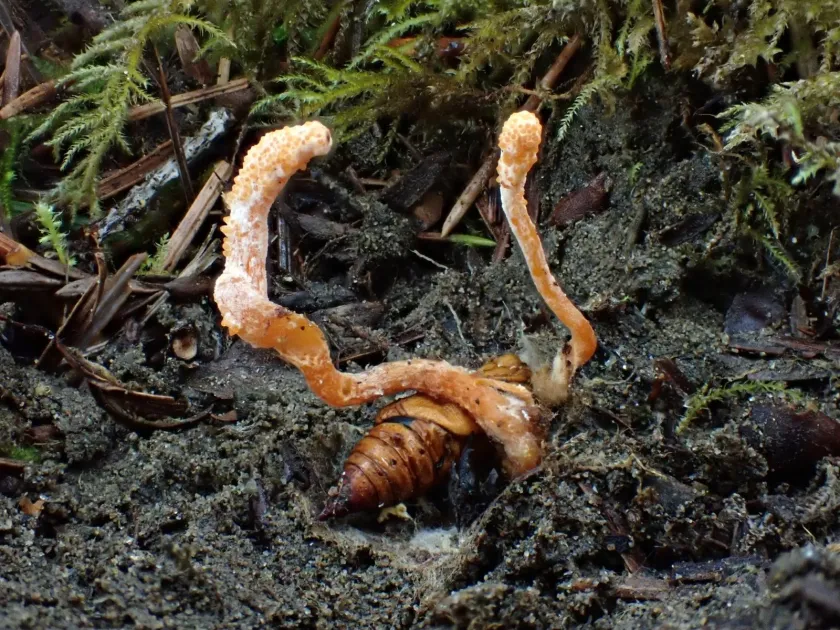
Description
Sowing dates
The cultivation of Cordyceps militaris begins with the sterile inoculation of a high-quality mycelium strain into a nutrient-rich substrate, typically based on rice grains and protein sources.
Sterility is the most critical factor during the sowing process; all containers and media are autoclaved to eliminate competitive fungi and bacteria before the inoculation.
After inoculation, the containers are kept in a dark environment at a stable temperature of 20–22°C to allow the mycelium to fully colonize the substrate.
This colonization phase usually lasts from two to three weeks, during which the mycelium penetrates the depth of the nutrient base.
Proper density and distribution of the inoculum ensure uniform growth, which is vital for achieving a high-quality yield of medicinal fruiting bodies.
Growing requirements
Cordyceps militaris is a member of the Clavicipitaceae family and requires precise environmental management to convert its mycelium into vibrant orange fruiting bodies.
Temperature control is essential, with 18–20°C being optimal for the development phase, ensuring the preservation of key metabolic compounds like cordycepin.
Light management is a unique requirement for this species; exposure to specific light spectra for 10–12 hours daily is necessary to stimulate proper fruiting body formation.
Humidity must be kept between 75% and 80%, while constant air exchange is mandatory to remove excess carbon dioxide and prevent the accumulation of contaminants.
The nutrient medium must be well-balanced, as the fungi rely on the provided proteins and carbohydrates to thrive in an artificial environment.
Yield
Average yield for professional cultivation is approximately 100–150 grams of dry biomass per kilogram of substrate, provided all growth conditions are strictly met.
Economic success is determined by the concentration of secondary metabolites, which are highly valued in the pharmaceutical and nutraceutical industries.
Efficiency can be improved through the use of high-yield strains and automated climate control systems that minimize production fluctuations.
Consistent growth cycles allow for year-round production, making it a highly profitable agricultural niche for controlled-environment facilities.
The final product's quality is verified through laboratory testing for active compound content, which determines the market grade and value.
Main diseases and pests
The primary threat in Cordyceps farming is the presence of green mold, such as Trichoderma, which can rapidly overgrow the substrate and destroy the entire crop.
Bacterial contamination often results from inadequate sterilization or poor ventilation, leading to liquefaction of the fruiting bodies and significant loss.
Environmental stress, including sudden temperature spikes or improper moisture levels, can lead to stunted growth and discolored or deformed fruiting bodies.
Incorrect lighting cycles can result in weak, pale specimens that lack the high concentrations of beneficial bioactive compounds required for commercial use.
Management of these threats relies on rigorous hygiene protocols, air filtration systems, and consistent monitoring of the growth environment.
Harvesting
Harvesting is performed when the fruiting bodies reach their peak size and a deep orange color, just before they release their spores into the environment.
The fruiting bodies are carefully manually extracted from the substrate, and any residual growing medium is removed from the base of the stalks.
Immediate post-harvest processing involves gentle drying at temperatures between 40°C and 45°C to stabilize the bioactive ingredients and extend shelf life.
Once dried, the product is graded for quality and size, then packaged in moisture-proof, UV-protected containers for shipment.
Maintaining the integrity of the dried product is essential for ensuring that its medicinal properties remain potent for the end consumer.