
Conostylis aculeata
Conostylis aculeata
Description
Growing requirements
Conostylis aculeata is a perennial herb belonging to the Haemodoraceae family. Native to the southwestern regions of Australia, this species is well-adapted to the harsh climatic conditions of its natural habitat.
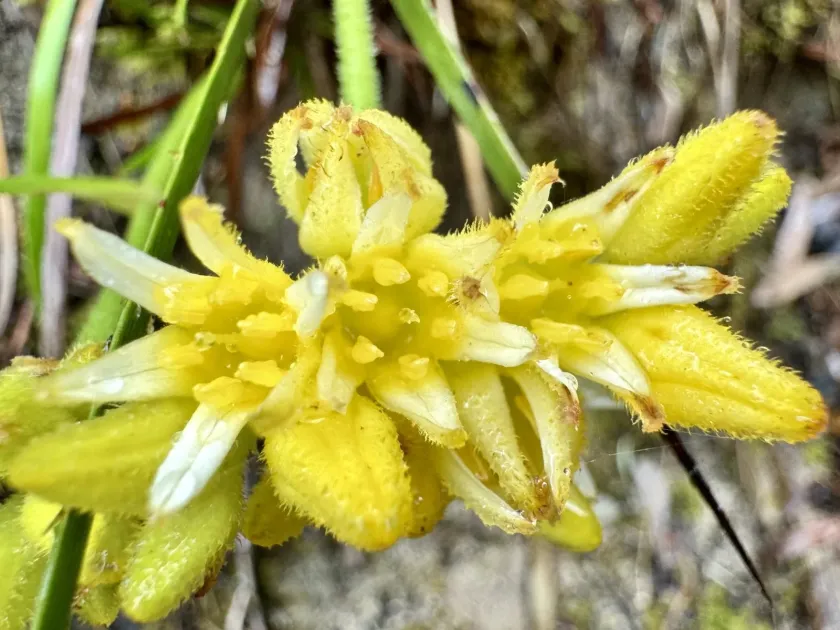
The plant grows in distinct clumps, featuring narrow, grass-like leaves that are often densely covered in rigid, hair-like structures, which account for its common name, Prickly Conostylis. During the blooming season, it produces spherical flower clusters atop sturdy stems, typically in shades of yellow or cream.
To cultivate this species successfully, one must ensure a well-draining soil substrate. It thrives in sandy or gravely soils that mimic the nutrient-poor conditions of its native environment, where organic matter is minimal.
Exposure to full sun is essential for optimal growth and flowering. While it is highly drought-tolerant once established, providing adequate spacing between individual plants is crucial to ensure good airflow and prevent moisture accumulation.
In landscape design, this species is utilized for low-maintenance garden beds and xeriscaping. Its ability to tolerate dry spells and poor soils makes it an excellent candidate for sustainable agricultural and horticultural projects in arid climates.
Main diseases and pests
Root rot is the most significant threat to Conostylis aculeata, typically caused by excessive irrigation or poor drainage in heavy clay soils. Maintaining a strict watering schedule is paramount for disease prevention.
Fungal leaf spot diseases may occur in humid conditions, especially if plants are overcrowded. Ensuring adequate ventilation and removing dead foliage are effective management strategies to mitigate these risks.
Pests such as aphids and mealybugs may occasionally infest the foliage, particularly during active growth phases. These can be managed using horticultural oils or systemic insecticides if the infestation is severe.
Soil-dwelling larvae can sometimes damage the root system, weakening the plant. Regular monitoring of the growing medium and maintaining soil health are effective preventative measures against such infestations.
Pruning should be performed carefully to avoid creating open wounds that could invite pathogens. Removing spent flowers and damaged leaves annually helps to keep the plant vigorous and resistant to potential biological threats.