
Yellow buttons
Chrysocephalum apiculatum (Labill.) Steetz
Description
Growing requirements
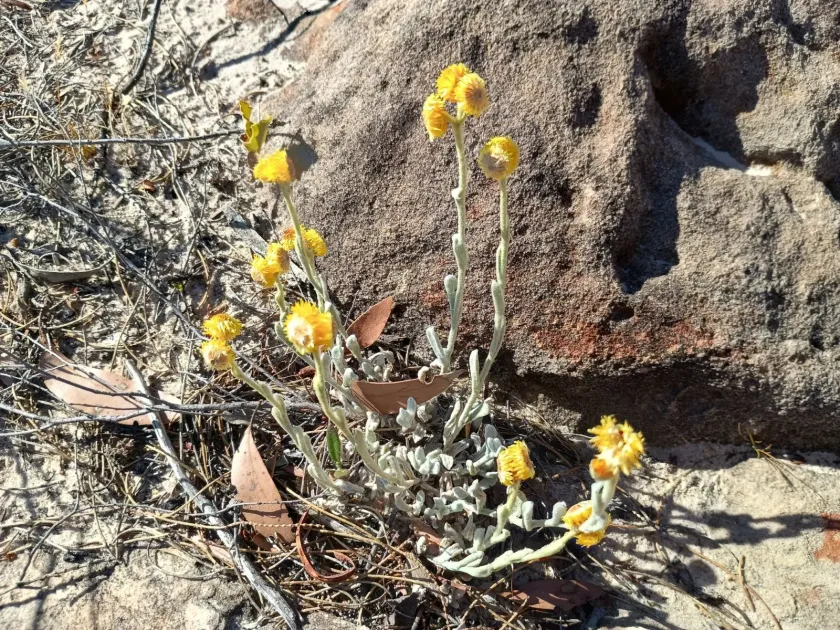
Yellow buttons (Chrysocephalum apiculatum) is a hardy perennial member of the Asteraceae family, native to the diverse landscapes of Australia. It is characterized by its silver-grey foliage and distinctive, globe-shaped golden-yellow flower heads that bloom for an extended period throughout the growing season.
As a plant native to arid and semi-arid regions, it has developed significant adaptations to survive harsh environmental stressors. It thrives in open, sun-drenched environments and is recognized for its exceptional resilience in heat-prone, water-scarce garden environments.
Successful cultivation of this species requires well-draining soil to prevent root rot. It performs best in sandy or gravelly soil types with low nutrient content, as overly fertile soils may lead to lush foliage growth at the expense of floral productivity and structural integrity.
In terms of management, this crop demands full solar exposure and minimal irrigation once the root system is established. Proper spacing is essential to ensure adequate air circulation around the canopy, which helps in maintaining the plant's health and preventing humidity-related issues.
The plant is highly valued in the commercial nursery sector for its use as a groundcover in xeriscaping, rock gardens, and container planting. Furthermore, it is a popular choice for dried flower arrangements due to the longevity and color retention of its inflorescences after harvesting.
Main diseases and pests
The main threats to the plant health are soil-borne fungal pathogens, such as Phytophthora or Pythium, which typically occur under conditions of waterlogged, poorly aerated soil.
In terms of pests, it may occasionally be affected by aphids, scale insects, or mealybugs in intensive cultivation environments or protected structures with poor ventilation.