
Rottnest Island pine
Callitris preissii Miq.
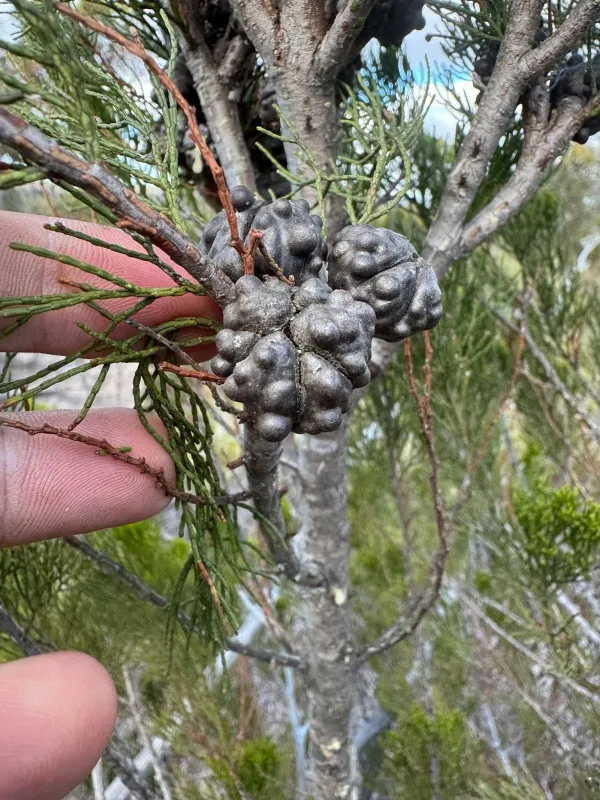
Description
Growing requirements
Callitris preissii, commonly known as the Rottnest Island pine, is a member of the Cupressaceae family. It is a resilient evergreen conifer that displays remarkable adaptability to varying environments, ranging from coastal dunes to inland arid landscapes.
Native to Australia, this species is widespread across the continent. It exhibits significant drought tolerance due to its physiological ability to regulate transpiration, making it an excellent candidate for reforestation in water-scarce regions.
The tree thrives in well-drained soils, including sandy and limestone-rich substrates. It is highly valued in agriculture for its ability to withstand saline conditions, allowing it to act as a stabilizer for degraded or salty soils in farm landscapes.
Agronomic requirements center on full sunlight exposure. Proper spacing is essential to prevent overcrowding and ensure adequate airflow, which is critical for minimizing moisture accumulation in the dense foliage of the tree.
Commercially, the species is harvested for its high-quality, durable timber, which is naturally resistant to termites and fungal decay. Beyond forestry, it serves as an effective windbreak, protecting sensitive crops from wind erosion and dessication.
Main diseases and pests
Root rot, primarily caused by waterlogged conditions, remains the most significant threat to Callitris preissii. Agronomists must ensure that planting sites have excellent drainage to mitigate the risks of pathogen-induced root failure.
Pest pressure from defoliating insects can occur during particularly dry seasons when tree vigor decreases. Integrated pest management strategies, such as biological control and habitat preservation for natural predators, are recommended.
Young plantations are vulnerable to browsing by rodents and small mammals. Protecting the base of the stems with physical barriers during the establishment phase is standard practice in silvicultural nursery management.
Fire risk is a major concern, as the foliage contains resinous compounds that make it flammable. Maintaining firebreaks around the perimeter of the groves is a necessary precaution in fire-prone regions of Australia.
Monitoring for signs of needle blight and stem borers is essential for maintaining plantation health. Regular inspection of terminal shoots allows for early detection of potential outbreaks before they impact tree productivity.