
Coco de mer
Lodoicea maldivica (J.F. Gmel.) Pers.
Description
Sowing dates
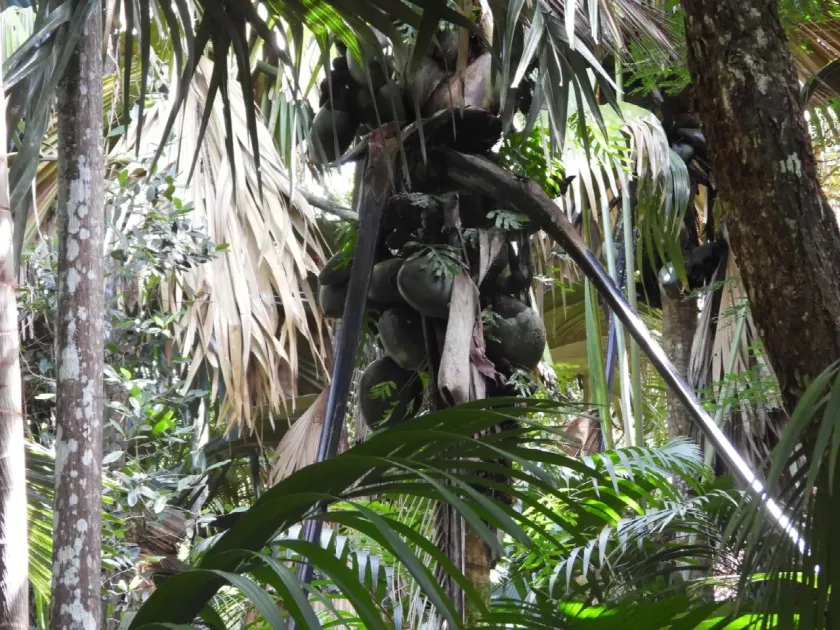
Lodoicea maldivica, commonly known as Coco de mer, is a palm species endemic to the Seychelles islands, belonging to the Arecaceae family. It is renowned for having the largest seed in the plant kingdom, which can weigh up to 25 kilograms.
The germination process is remarkably slow, often requiring one to three years to sprout. The palm prioritizes the development of a deep taproot before pushing its first leaf above the ground, making it extremely difficult to transplant.
Cultivation is primarily restricted to botanical gardens due to the slow growth rate and the specific tropical conditions required. Propagation is done exclusively via seeds, which must be planted in deep, nutrient-rich substrates.
The plant is dioecious, meaning individual trees are either male or female. Natural pollination is facilitated by wind, insects, and lizards, though artificial pollination is sometimes used in controlled nursery environments to ensure success.
A mature palm can reach heights of 30 meters and live for several centuries. Its fan-shaped leaves are among the largest in the plant world, providing an extensive surface area for energy capture in the dense, high-humidity canopy.
Growing requirements
Coco de mer requires a consistently tropical climate with temperatures never dropping below 20°C. High ambient humidity is critical for the healthy development of its expansive foliage.
The ideal soil is deep, well-draining, and rich in humus. As the palm grows, its roots extend deep into the earth, requiring a significant volume of soil and protection from waterlogging, which could cause root rot.
Light requirements are intense for adult trees, which need full tropical sun to fuel the development of their massive fruits. Seedlings, however, often grow in the dappled light of the forest understory, adapting to lower light levels.
Watering must be balanced; while the species thrives in high-rainfall areas, the soil must not remain stagnant. Proper ventilation around the crown of the palm is essential to prevent fungal infections.
Nutrient requirements are modest but specific. Because the palm grows slowly, excessive fertilizer application can lead to salt buildup in the soil and damage the sensitive root system, which is adapted to natural forest nutrient cycles.
Yield
Yield is not applicable in the traditional agricultural sense, as the tree does not reach maturity until it is 20 to 30 years old. Production is a generational commitment rather than a commercial enterprise.
A single female palm can produce approximately 30 fruits, with each maturation cycle spanning 6 to 7 years. The fruits are protected by a thick, fibrous husk and are highly prized for their unique, double-nut structure.
Economic use is strictly regulated and limited to tourism and high-end souvenir trade within the Seychelles. Exporting the nuts requires special permits, as the species is protected to prevent exploitation.
Traditional uses include using the palm leaves for thatching roofs and making baskets, while the wood is utilized in local construction projects. However, these uses are secondary to the preservation of the living trees.
The botanical value far exceeds any agricultural utility. Each seed is carefully monitored by environmental authorities to ensure that the population remains stable and protected from illegal trade.
Main diseases and pests
The primary threat to Lodoicea maldivica is habitat loss due to land development and urbanization. Protecting the remaining natural forests is essential for the survival of this rare species.
Invasive species, particularly rats, cause significant damage to seeds and young sprouts. Managing these pests in natural forest environments is an ongoing challenge for conservationists.
Fungal pathogens pose a risk, especially during periods of unseasonable high humidity combined with poor airflow. Such conditions can lead to the rapid decline of individual trees if not managed appropriately.
Climate change, manifesting as erratic weather patterns and prolonged droughts, places additional stress on the palms. This reduces their ability to produce viable seeds and makes them more susceptible to indigenous pests.
Strict legal protection and monitoring are required to prevent over-harvesting. Public education and controlled tourism are the primary tools currently used to protect the Coco de mer from extinction.