
Italian sainfoin
Hedysarum coronarium L.
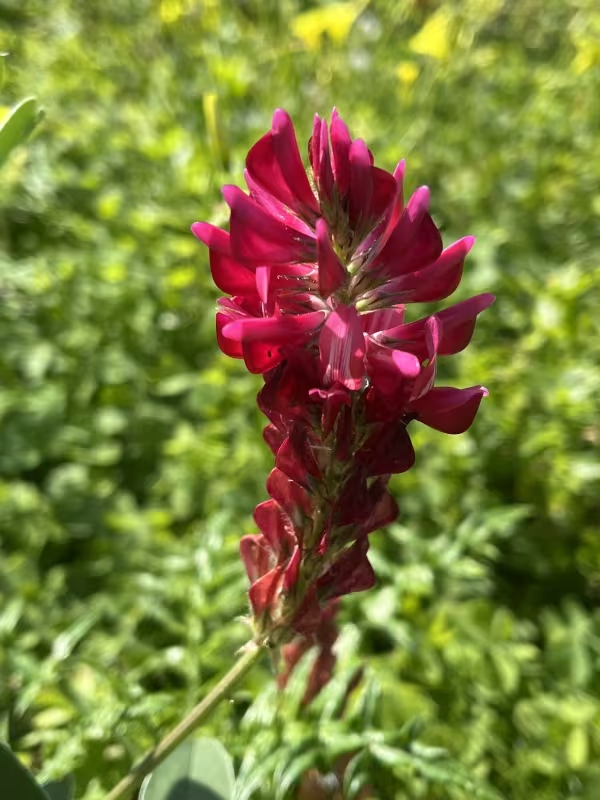
Description
Sowing dates
Italian sainfoin (Hedysarum coronarium L.) is a perennial legume recognized for its excellent nutritional value and its ability to improve soil nitrogen levels through symbiotic fixation.
Sowing is typically performed in the spring when soil temperatures reach 8–10 degrees Celsius, ensuring favorable conditions for rapid seed germination and root system development.
Seeds should be planted at a depth of 1.5 to 3 centimeters, which provides the necessary soil moisture contact and adequate cover to protect the seeds from environmental stressors.
It is essential to select sunny, well-drained plots for cultivation, as this species is highly sensitive to shading and requires significant light exposure to reach its growth potential.
Applying optimal seeding rates, typically ranging from 15 to 25 kilograms per hectare, ensures a dense and uniform stand, minimizing weed competition in the early stages of growth.
Growing requirements
Italian sainfoin thrives best in neutral to slightly alkaline soils, making it highly suitable for calcareous regions where other legumes might struggle to establish effectively.
The plant requires well-aerated, loose soil structures; heavy or waterlogged clay soils should be avoided as they significantly increase the risk of root diseases and poor growth.
Regarding climate, the plant prefers Mediterranean-type conditions with mild winters and warm springs, as extreme frost can lead to winter injury in colder geographic regions.
While exhibiting moderate drought tolerance, the crop requires consistent moisture during its peak growing phases to maintain high biomass production and foliage quality.
Proper soil fertility management is crucial, and although it fixes nitrogen, the plant benefits from balanced phosphorous and potassium levels to enhance overall plant vigor.
Yield
The yield potential of Italian sainfoin is impressive under managed conditions, offering farmers a reliable source of high-protein forage throughout the growing season.
With good moisture availability and proper nutrient management, farmers can achieve 3 to 4 cuttings annually, providing a consistent supply of nutritious livestock feed.
Dry matter yields vary, but can reach 10 to 15 tonnes per hectare, making this species a competitive option for high-intensity forage production systems in suitable climates.
The forage is highly palatable and rich in digestible proteins, which significantly boosts meat and milk production in grazing livestock such as cattle and sheep.
In addition to biomass, Italian sainfoin serves as a high-quality honey source, providing extra economic value to growers through apiculture and supporting local biodiversity.
Main diseases and pests
Powdery mildew and various leaf spot diseases are the primary threats, particularly in humid or overcrowded conditions where air circulation is restricted within the canopy.
Root rot, often caused by pathogens thriving in wet, stagnant soil, remains a major concern that can lead to thinning stands and reduced persistence of the perennial crop.
Pests like sitona weevils (nodule weevils) frequently feed on young shoots and roots, which can be devastating to seedling stands during the critical establishment phase.
Aphid outbreaks during the flowering period can significantly deplete plant energy, resulting in reduced forage quality and lower seed set for future propagation efforts.
Integrated pest management strategies, including crop rotation and the use of resistant varieties, are essential to maintain healthy fields and ensure long-term productivity.
Harvesting
Harvesting for forage should ideally occur at the early bloom stage to maximize the protein content and overall digestibility of the hay or silage produced.
For hay production, gentle handling during the drying process is necessary to minimize leaf shattering, as the leaves contain the highest concentration of vitamins and minerals.
Maintaining a cutting height of about 5–7 centimeters is recommended to preserve the growing points and allow for faster regrowth of the plants after each consecutive harvest.
When harvesting for seed, the plants should be left until the pods are fully mature and darkened to ensure high germination rates for the following season's planting.
Proper storage of the harvested material is critical; ensuring low moisture levels in hay and clean, dry storage areas prevents the development of harmful molds and mycotoxins.