
Cocky's tongue
Templetonia retusa (Vent.) R. Br.
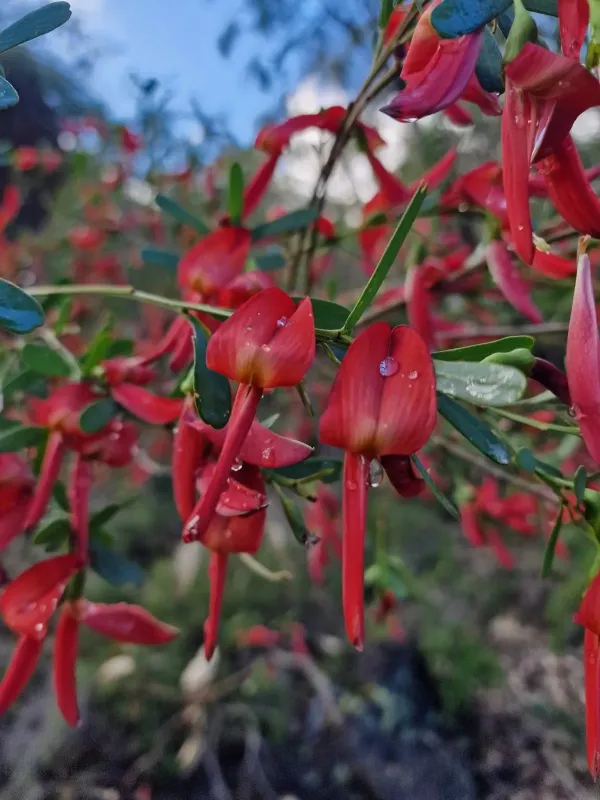
Description
Growing requirements
Templetonia retusa, commonly known as Cocky's tongue, is a distinctive evergreen shrub belonging to the Fabaceae (legume) family. Native to the rugged landscapes of Western and South Australia, it is prized for its unique, retuse-shaped leaves and vivid red flowers.
The plant thrives in full sun, requiring bright exposure for optimal flowering. It is exceptionally well-adapted to arid environments, exhibiting high drought tolerance once established, which makes it a sustainable choice for xeriscaping.
Soil requirements are strict regarding drainage. It performs best in sandy, well-aerated, or calcareous soils. Heavy soils that retain moisture are generally unsuitable, as the species is highly susceptible to root decay when subjected to waterlogging.
Climatic preferences include mild winters and warm, dry summers. While it can withstand light frosts, prolonged exposure to sub-zero temperatures can damage the foliage and stem structure, necessitating protection in colder climates.
Agricultural management involves minimal maintenance. Occasional light pruning after the flowering season encourages denser growth and maintains the desired shape of the shrub, ensuring it remains an attractive feature in the garden.
Main diseases and pests
Root rot, primarily caused by phytophthora or pythium species, remains the most significant threat to the survival of the plant. This is almost always triggered by excessive irrigation during humid conditions.
Insect pests, including spider mites and various scale insects, can become problematic in sheltered or indoor environments with poor airflow. These pests sap the plant's vitality, leading to leaf yellowing and stunted growth.
Monitoring the plant for signs of stress is crucial. Early detection of pests allows for localized treatment, avoiding the need for broad-spectrum pesticides that could harm beneficial garden insects.
Fungal diseases like leaf spot may emerge if the shrub is planted in an area with stagnant air. Increasing ventilation and maintaining spacing between plantings are effective preventive strategies for long-term health.
Overall, the health of Cocky's tongue is best maintained by observing its native habitat constraints. By mirroring these conditions in a cultivated setting, the risk of disease is significantly minimized.