
Cochliostema odoratissimum
Cochliostema odoratissimum
Description
Growing requirements
Cochliostema odoratissimum is an intriguing perennial plant belonging to the Commelinaceae family. Native to the tropical regions of Central and South America, it primarily grows as an epiphyte in humid forest environments, often found clinging to tree trunks or in rock crevices.
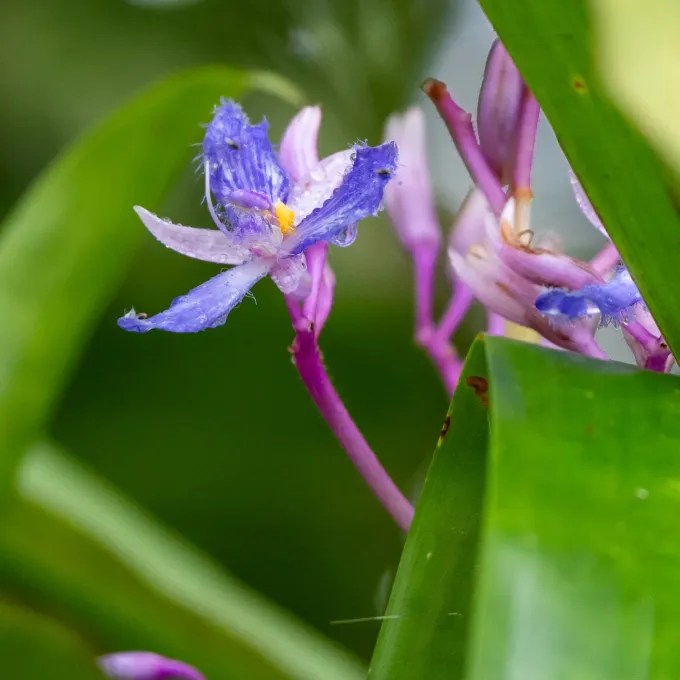
The plant is defined by its dramatic, large, succulent, and sword-shaped leaves arranged in a dense, spiral rosette. The foliage often features striking purple undertones on the underside, and it produces fragrant, showy flowers that emerge from the axils of the leaves.
To cultivate this species successfully, one must replicate its natural humid and warm habitat. It thrives best in temperatures between 20°C and 26°C and requires a consistently high level of relative humidity to prevent the tips of the leaves from drying out.
The substrate must be extremely well-draining, mimicking the bark and moss environments where it occurs naturally. A mixture of orchid bark, perlite, peat moss, and activated charcoal is recommended to ensure optimal root aeration and moisture retention.
Regarding light, it prefers bright, indirect light. Direct sunlight is harmful and can scorch the foliage quickly. Ideally, place the plant in a spot with soft, filtered light, similar to the light levels found under a dense jungle canopy.
Main diseases and pests
The most common threat to Cochliostema odoratissimum is crown rot, caused by excessive moisture trapped within the central rosette. This condition is often fatal if not caught in the early stages and treated by removing the decayed material.
Pests such as mealybugs and spider mites are frequent adversaries. These pests flourish in indoor environments with poor air circulation and low humidity, quickly colonizing the base of the leaves and stems.
Regular monitoring is essential; look for fine webbing on the underside of leaves or white, cottony deposits in the leaf axils, which indicate a mealybug infestation that requires immediate intervention.
Fungal leaf spot diseases may also occur if the humidity is too high without adequate air movement. Improving ventilation around the plant is the most effective way to prevent these pathogens from establishing a foothold.
When applying pesticides or fungicides, always test on a small area of the leaf first, as the foliage of this plant can be sensitive to chemical treatments compared to more common household plants.