
Cathedral bells
Cobaea scandens Cav.
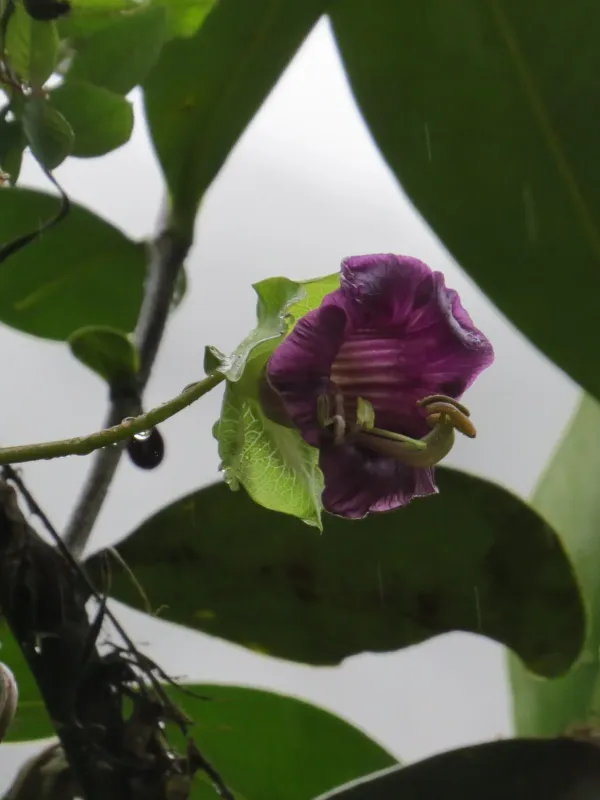
Description
Sowing dates
The propagation of Cobaea scandens is typically performed by sowing seeds indoors during late winter, specifically from February to early March, to ensure a long flowering season.
The seeds are relatively large and flat; soaking them in warm water for several hours before sowing can significantly improve germination rates.
It is recommended to sow seeds individually in pots to minimize root disturbance, as the plant reacts negatively to transplanting shocks during its early growth stages.
Keep the substrate consistently moist and maintain temperatures around +20°C to +22°C to facilitate uniform seedling emergence within two to three weeks.
Hardening off the seedlings is a critical final stage before planting them outdoors once the danger of frost has completely passed in the local climate.
Growing requirements
Cobaea scandens is a member of the Polemoniaceae family, native to the tropical forests of Mexico and Central America where it grows as a perennial.
As a vigorous climbing vine, it requires robust supports, such as trellises or wires, which it anchors onto using specialized branched tendrils.
The plant thrives in fertile, well-draining, and moisture-retentive soils with a neutral pH, preferring a sunny location sheltered from strong, damaging winds.
Sufficient nitrogen fertilization is necessary during the vegetative phase to support the rapid development of its stems, which can reach significant lengths.
Adequate spacing is vital to ensure good air circulation, which prevents excessive moisture accumulation around the base of the plant during the growing season.
Main diseases and pests
The main pests affecting Cobaea scandens include aphids and spider mites, which tend to congregate on young growth and the undersides of the leaves.
Fungal issues, such as powdery mildew, may occur if the plants are situated in areas with poor ventilation or high humidity throughout the summer months.
Preventative measures include maintaining optimal plant spacing and avoiding overhead irrigation, which keeps the foliage dry and discourages disease.
In case of heavy infestation, using organic or synthetic insecticides labeled for ornamental plants is necessary to prevent severe plant stress and stunted growth.
- Regular inspection of leaf undersides
- Application of suitable acaricides
- Ensuring adequate site ventilation
- Maintaining proper soil drainage