
Clusia rosea
Clusia rosea Jacq.
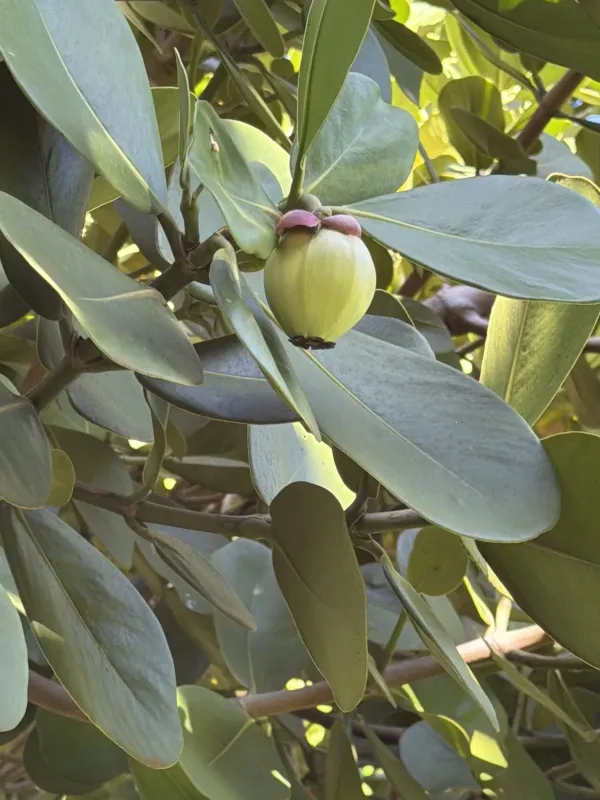
Description
Growing requirements
Clusia rosea, commonly known as the autograph tree, is a member of the Clusiaceae family. It is a slow-growing evergreen plant that often starts its life cycle as an epiphyte, eventually sending roots down to the ground to establish itself as a hemiepiphyte.
Native to tropical regions of the Caribbean and Central America, this plant thrives in warm, humid conditions. It requires stable temperatures, ideally between 20°C and 28°C, and cannot tolerate frost, which makes it suitable primarily for tropical climates or greenhouse production.
Proper soil management is crucial for Clusia rosea; it requires a well-draining, nutrient-rich potting medium. The soil should remain consistently moist but never waterlogged, as poor drainage is the primary cause of root failure in this species.
In terms of lighting, the plant demands bright, indirect light to maintain its thick, leathery foliage. While it can handle some direct morning sunlight, intense midday exposure should be filtered to prevent scorched leaves and ensure healthy leaf development.
Economically, Clusia rosea is highly valued for its ornamental properties in landscaping and interior design. Its ability to thrive in pots makes it a staple for high-end office buildings and botanical garden exhibits where a tropical aesthetic is desired.
Main diseases and pests
Scale insects and mealybugs are the most persistent pests for Clusia rosea. These sap-sucking insects often congregate in the leaf axils, leading to stunted growth and the development of sooty mold on the leaves due to their secretions.
Spider mites represent a significant threat in environments with low relative humidity. Their presence is usually signaled by fine webbing and a mottled appearance on the upper surface of the leaves, necessitating increased humidity levels or acaricide applications.
Root rot is the most common physiological disorder caused by improper irrigation. When roots remain in stagnant water, they lose their ability to uptake nutrients, leading to yellowing of the foliage and, if left untreated, the death of the specimen.
Leaf spot diseases, often caused by fungal pathogens in damp, unventilated conditions, can compromise the aesthetic quality of the plant. Fungicide treatments and improving air circulation around the canopy are recommended management strategies.
Maintaining a clean growing area and inspecting new plants before integrating them into an existing collection is vital. Early identification of pest clusters can often be managed with manual removal or mild insecticidal soap before a full-scale infestation occurs.