
Tree-like Climacium
Climacium dendroides
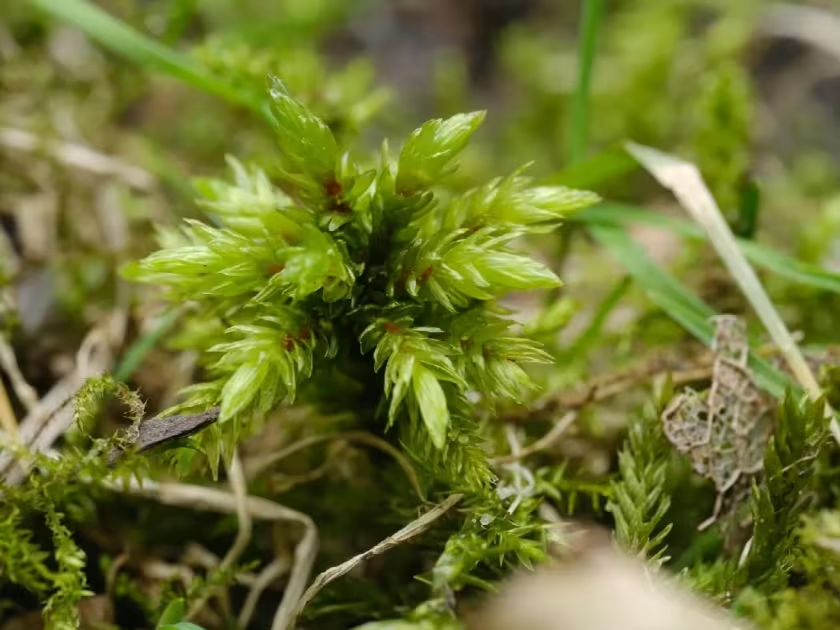
Description
Growing requirements
Tree-like Climacium (Climacium dendroides) is a prominent species within the Climaciaceae family, known for its distinctive dendroid, tree-like growth form. It is highly valued in environmental restoration and specialized landscaping projects.
This species is native to the Northern Hemisphere's temperate regions, typically found in areas with high humidity such as swamps, wet meadows, and forested riparian zones. It thrives in habitats where soil moisture levels are consistently high.
Successful cultivation depends strictly on environmental conditions. The optimal soil is acidic to neutral, rich in organic matter, and must maintain constant dampness. Poor drainage leads to root suffocation, while excessive dryness causes the moss to wither quickly.
Light management is crucial, as the species is intolerant to direct, intense sunlight. Shaded areas or environments with diffused light provide the best conditions for photosynthesis and the preservation of the plant's characteristic green color.
Propagation is primarily vegetative, involving the division of healthy mats. These mats must be placed onto moist, sterile peat-based substrates to ensure rapid establishment and growth under controlled, high-humidity conditions.
Main diseases and pests
Habitat loss due to land drainage and wetland reclamation poses the most significant threat to the survival of natural populations of Climacium dendroides. Changes in groundwater levels have a profound negative impact on its vigor.
Environmental pollutants, particularly in aquatic runoff, can accumulate in the plant tissue, as mosses effectively absorb substances from their environment. This makes them excellent bioindicators but vulnerable to toxic stress.
Competition from invasive grasses and vascular plants often results in the displacement of moss mats. Mechanical weeding and regular clearing are necessary to maintain the dominance of the moss colony in managed systems.
Fungal infections can occur if there is excessive nitrogen accumulation or inadequate aeration in the substrate. Over-fertilization is a common error that leads to the breakdown of the plant's delicate physical structure.
Invertebrate pests, such as slugs or certain insect larvae, can feed on the tender parts of the moss, especially in greenhouse conditions. Integrated pest management strategies using non-toxic methods are recommended for effective control.