
Cliffortia ruscifolia
Cliffortia ruscifolia
Description
Growing requirements
Cliffortia ruscifolia is an evergreen shrub belonging to the Rosaceae family. It is a distinctive component of the South African fynbos, a unique biome characterized by diverse and highly specialized shrubby vegetation.
The cultivation of this plant requires specific soil conditions. It thrives in well-draining, acidic, sandy soils that are nutrient-poor, reflecting its evolutionary adaptation to the fynbos environment.
Climatic requirements involve full sun exposure, which is necessary to maintain the plant's dense foliage and healthy development. It is highly drought-tolerant once established and does not thrive in environments with high humidity.
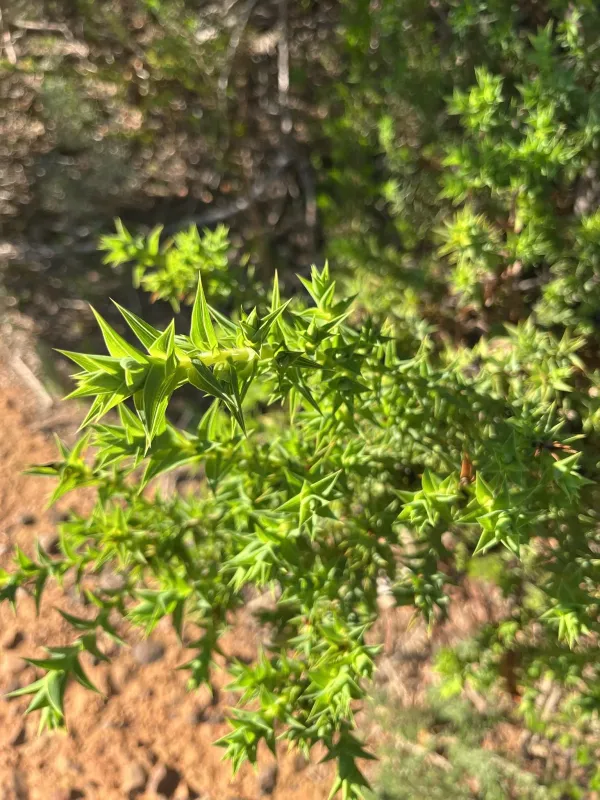
Botanically, Cliffortia ruscifolia is recognized by its rigid, needle-like leaves and compact growth habit. The flowers are generally small and inconspicuous, highlighting the foliage's architectural value.
In landscape use, this species is utilized for its resilience in arid landscapes and its ability to withstand wind. It is an excellent choice for xeriscaping where water conservation is a priority.
Main diseases and pests
The most significant threat to Cliffortia ruscifolia is root rot caused by poor drainage or excessive irrigation, which the plant is not adapted to handle in its natural lifecycle.
Pests such as scale insects and aphids may occasionally infest young growth, particularly in protected garden environments where natural predators are absent.
Fungal diseases can occur if the airflow around the plant is insufficient, emphasizing the need for proper spacing and avoiding dense planting in humid climates.
Nutrient toxicity, especially from high-phosphorus fertilizers, can be detrimental to the plant, as it is physiologically adapted to thrive in phosphorus-deficient soils.
Maintenance involves periodic sanitation to remove dead wood and dead leaves, ensuring that the plant remains vigorous and aesthetically appealing throughout its life cycle.