
Cleistogenes hackelii
Cleistogenes hackelii
Description
Growing requirements
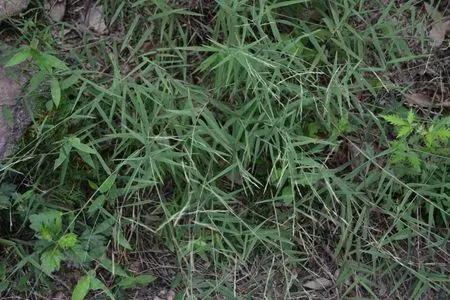
Cleistogenes hackelii is a perennial grass belonging to the Poaceae family. Known for its remarkable resilience, it is widely distributed in arid and semi-arid regions where it thrives under harsh climatic conditions.
This species is highly adapted to well-drained soils, including sandy, rocky, and loamy substrates. Its root architecture allows it to access deep water reservoirs, which is crucial for survival during prolonged dry seasons.
The plant requires full sun exposure to achieve optimal growth and development. It is characterized by high tolerance to heat, wind, and low humidity, making it an excellent candidate for stabilizing eroded landscapes.
Soil fertility requirements for Cleistogenes hackelii are relatively low. It is capable of flourishing in environments where nutrient availability is limited, representing an important biological resource for marginal lands.
Biologically, the plant exhibits a flexible phenology, allowing it to adapt its growth cycle based on rainfall distribution. This trait ensures high persistence in natural grasslands and improved pastures across its habitat range.
Harvesting
The primary agricultural application of Cleistogenes hackelii is its use as forage for livestock. It provides a reliable source of green biomass during the summer months, a period when many other forage species enter dormancy.
When harvested for hay, timing is critical. Cutting should occur before the plant enters the late reproductive stage, ensuring that the nutritional value of the foliage remains high for animal digestion.
Pasture management should focus on maintaining a moderate grazing intensity. Because the grass is perennial, overgrazing can deplete the roots' carbohydrate reserves, potentially reducing plant vigor in subsequent seasons.
Farmers can integrate this species into seed mixtures to improve the biodiversity and drought resistance of permanent grasslands. Its ability to regrow rapidly after disturbance makes it a durable forage component.
Furthermore, research indicates that this grass serves as a valuable genetic resource for breeding programs aiming to develop new, climate-resilient forage varieties that can withstand extreme temperature fluctuations.