
Cleisostoma teretifolium
Cleisostoma teretifolium
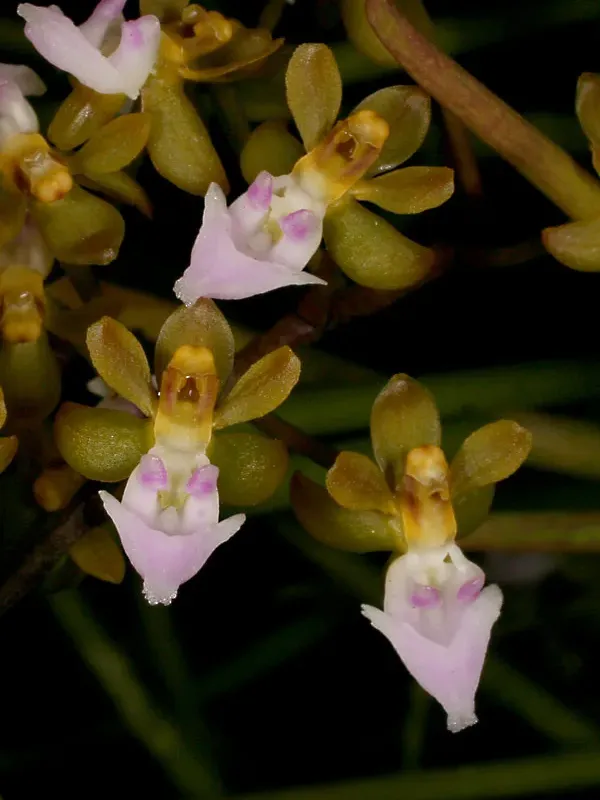
Description
Growing requirements
Cleisostoma teretifolium is a unique epiphytic orchid species belonging to the Orchidaceae family, native to the tropical regions of Southeast Asia. This plant is well-known for its terete, succulent leaves, which are specialized organs evolved to store water efficiently in its natural forest canopy habitat.
To cultivate this species successfully, growers must maintain a high relative humidity, ideally between 65 and 80 percent. The temperature range should remain moderate and consistent, mirroring the tropical climate where this plant thrives, avoiding extreme temperature fluctuations throughout the day.
The plant requires bright, filtered light to perform photosynthesis without causing leaf desiccation or sunburn. In greenhouse settings, placing the orchid in areas with indirect sunlight is essential for maintaining the health of its specialized cylindrical foliage.
A proper substrate is critical for the long-term vitality of Cleisostoma teretifolium, as it requires excellent drainage and oxygen access to the roots. Typically, a coarse mix of pine bark, charcoal, and perlite is used to prevent the root system from becoming waterlogged.
Watering frequency should be adjusted according to the evaporation rates within the growing environment. It is crucial to allow the substrate to dry slightly between waterings to prevent root decay, as these orchids are highly susceptible to rot when kept in consistently soggy conditions.
Main diseases and pests
The most common disease impacting this species is fungal root rot, which typically develops due to poor air circulation and overwatering. Maintaining a breezy environment is the most effective preventative measure against the proliferation of pathogenic fungi and bacteria.
Insects like mealybugs and spider mites are frequent pests that thrive in dry environments or when the plant is stressed. Early intervention using horticultural oils or systemic insecticides is recommended to manage infestations before they cause significant damage to the plant structure.