
Cladopus hookeriana
Cladopus hookeriana
Description
Growing requirements
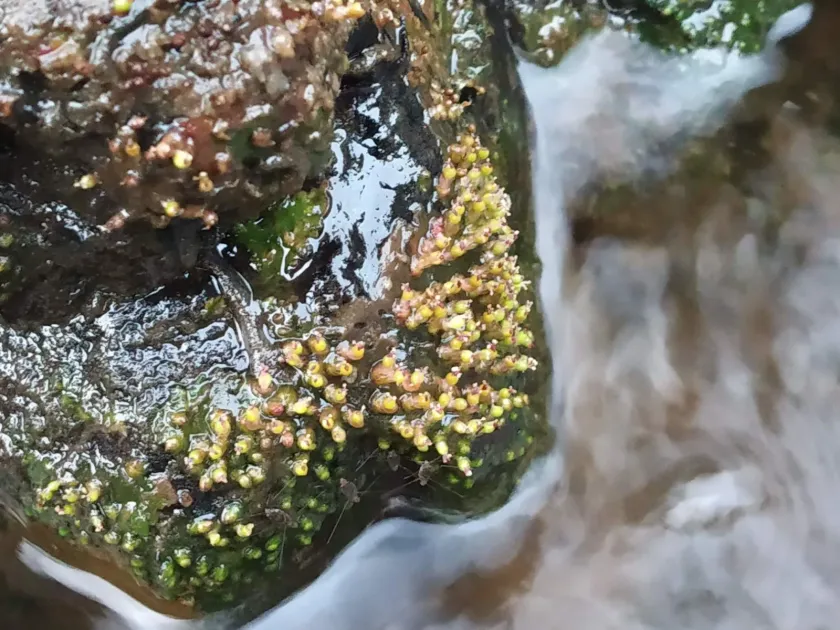
Cladopus hookeriana is a specialized aquatic plant species belonging to the Podostemaceae family. It is distinct for its adaptation to high-velocity river environments, where it grows attached to rock surfaces, functioning as a lithophytic hydrophyte.
The native distribution of this species covers specific tropical river systems in Asia. Its habitat is characterized by clear, fast-flowing water with high oxygen saturation, which is essential for the plant's metabolic processes and overall survival.
From an ecological standpoint, the plant has no agricultural cultivation value, but it is highly significant as a bioindicator of river water quality. It requires stable environmental parameters, including specific temperature ranges and nutrient-rich yet non-polluted water flows.
The botanical structure of Cladopus hookeriana includes a thalloid body that adheres to submerged rocks using specialized structures called haptors. This morphological adaptation allows the plant to thrive in turbulent currents that would displace most other aquatic vegetation.
The lifecycle of the species is strictly linked to seasonal water level changes. During the dry season, when water levels recede and rocks are exposed, the plant completes its reproductive cycle, ensuring the dispersal of seeds for the following colonization phase.