
Cionura erecta
Cionura erecta
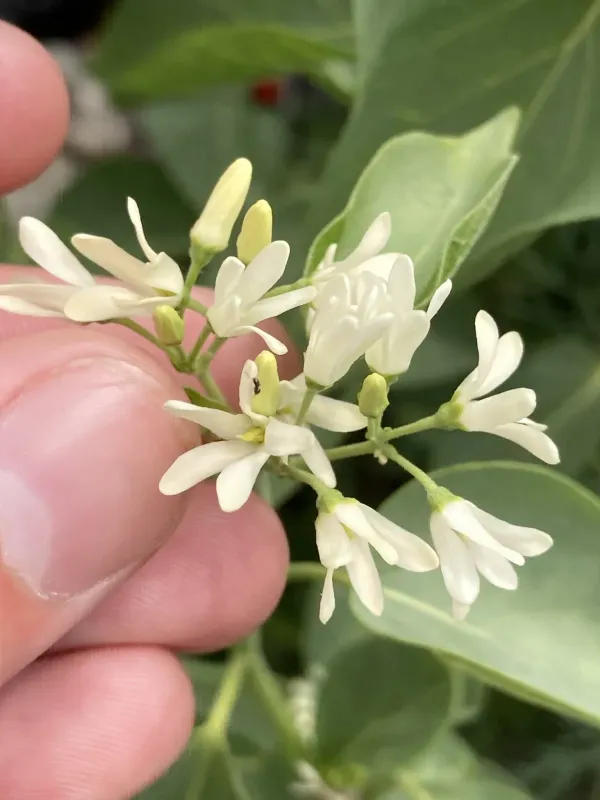
Description
Growing requirements
Cionura erecta is a perennial subshrub belonging to the Apocynaceae family. Native to the Mediterranean region and parts of the Middle East, this plant is well-adapted to arid environments, rocky slopes, and limestone outcrops where moisture levels are often unpredictable.
Botanically, it is recognized by its sturdy, erect stems and opposite leaves. The plant exhibits typical characteristics of the Apocynaceae family, including the presence of latex within its vascular system, which serves as a natural defense mechanism against herbivores and environmental stressors.
Successful cultivation of Cionura erecta requires well-drained, alkaline soils. It performs exceptionally well in sunny locations with low humidity, making it an ideal candidate for agricultural projects in Mediterranean climates or regions facing increasing desertification.
The plant demonstrates remarkable drought resistance once established. During its early developmental stages, it requires light irrigation to ensure proper root system expansion, but mature plants can survive extended periods of water scarcity without significant yield loss.
The primary economic use of this plant is apiculture. It serves as an essential late-season honey plant, providing nectar when many other forage sources have already withered. Additionally, ongoing research investigates its potential use in the pharmaceutical industry and as a specialized fiber crop.
Main diseases and pests
Despite its robustness, Cionura erecta is susceptible to root rot if planted in heavy or waterlogged soils. Adequate soil aeration and proper land preparation before sowing are essential to prevent the accumulation of moisture around the root zone.
Pest pressure is relatively low; however, sap-sucking insects can occasionally infest the foliage during high-temperature periods. Integrated pest management strategies, focusing on biological controls, are recommended to maintain plant health and nectar production efficiency.