
Blue grama
Chondrosum gracile
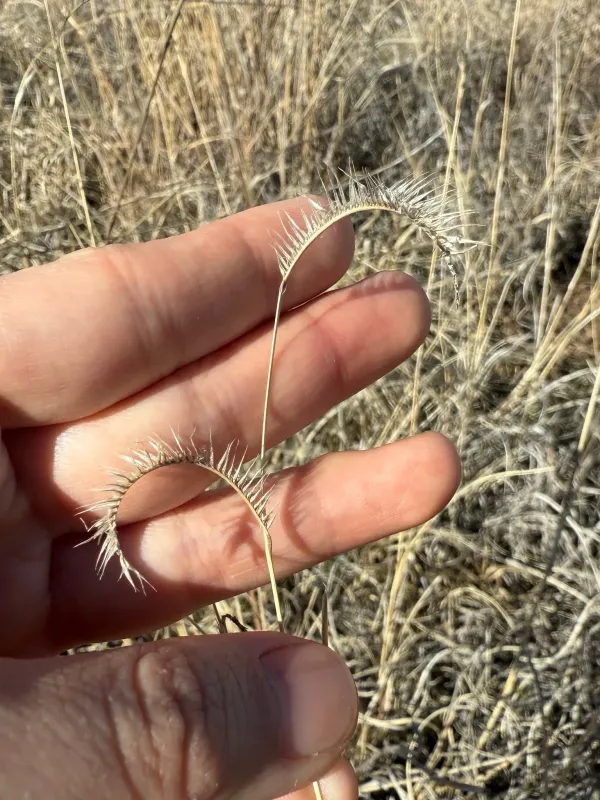
Description
Sowing dates
The sowing of Blue grama, scientifically known as Chondrosum gracile, is best performed in the spring when soil temperatures allow for consistent growth.
Seeds should be planted at a shallow depth of approximately 1 to 2 centimeters to ensure they are not buried too deeply to emerge effectively.
Preparation of a fine, firm seedbed is essential for this species to promote good soil-to-seed contact, which significantly improves the germination rate.
In arid regions, planting can be done using a cover crop, which provides shade and protects young seedlings from extreme heat and surface drying.
Drilling the seeds is often preferred over broadcasting to achieve uniform distribution and higher plant density across the field.
Growing requirements
Blue grama belongs to the Poaceae family and is highly valued in agriculture for its exceptional drought tolerance and ability to thrive in harsh environments.
This grass species prefers well-drained sandy or loamy soils but can adapt to lower-fertility sites where more demanding forage crops would fail.
It is a sun-loving plant that requires full exposure to sunlight for optimal development and maximum biomass production throughout the growing season.
The species is remarkably adaptable to various soil pH levels, making it a reliable choice for restorative planting in semi-arid and prairie landscapes.
Its deep and extensive root system allows the plant to access subsoil moisture, enabling survival during severe summer heatwaves and dry spells.
Yield
While the overall biomass production of Blue grama is moderate, it provides high-quality, nutrient-dense forage that is ideal for grazing livestock.
The crop is primarily utilized as a long-term pasture grass, capable of sustaining cattle and sheep due to its excellent palatability and nutritional profile.
Under managed grazing conditions, the grass maintains steady productivity, as it recovers quickly from moderate defoliation and grazing pressure.
When harvested as hay, the grass yields high-protein feed if cut during the appropriate stage of its reproductive development before maturity.
Economic value is driven by its longevity in established pastures, which reduces the necessity for frequent reseeding and soil cultivation over time.
Main diseases and pests
Blue grama exhibits strong natural resistance to many common grass diseases, minimizing the need for chemical intervention in most agricultural settings.
Root rot diseases may occasionally occur in areas with poor drainage or standing water, especially during early spring or periods of excessive rainfall.
Insects such as grasshoppers and aphids can occasionally impact the crop during population spikes, but severe damage to established stands is relatively rare.
Weed competition during the initial establishment phase is a significant threat that requires active management to prevent the seedlings from being overshadowed.
Overall, the plant is robust and well-equipped to recover from minor pest or disease pressure through its vigorous growth and reproductive capabilities.
Harvesting
For high-quality hay production, harvesting should be performed during the heading stage to capture the best balance of protein and total digestible nutrients.
When managing pastures, rotational grazing is recommended to ensure that the plants are not grazed too low, protecting the crowns for future growth cycles.
Proper harvest height is critical, as it prevents depletion of root reserves and encourages rapid regrowth during the summer months.
Cured hay must be stored in dry, ventilated environments to prevent moisture accumulation, which can lead to mold and a decrease in feed quality.
Sustainable grazing practices allow the Blue grama stand to remain productive for many years, providing a reliable forage base for livestock operations.